




Nature’s Ultimate Sunscreen
Melanin is one of nature’s most versatile and ancient molecules. It is the pigment responsible for colour in almost all life forms, from human skin to the dark ink of a cuttlefish. Its primary job has always been protection. By absorbing a broad spectrum
of light, especially damaging ultraviolet (UV) radiation, melanin acts as a natural, built-in sunscreen. Scientists have long been fascinated by its properties, particularly those of eumelanin, the most common type found in humans and in the ink of cephalopods like squid. This fascination has led to the creation of bio-synthetic melanin, a lab-made version that mimics the chemical structure and protective qualities of its natural counterpart, allowing it to be produced at scale for technological applications.
The Hidden Weakness of Solar Power
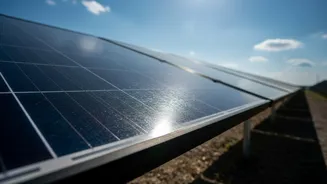
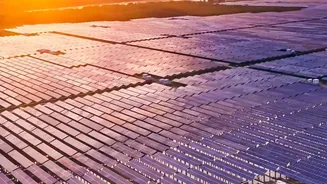
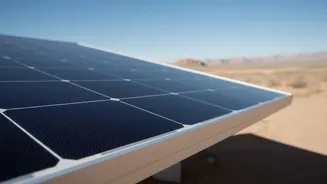
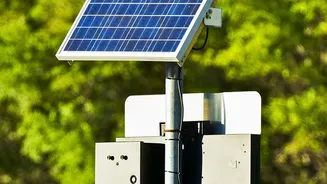
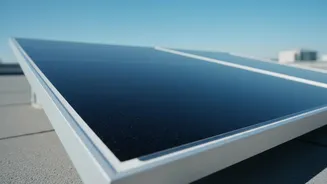
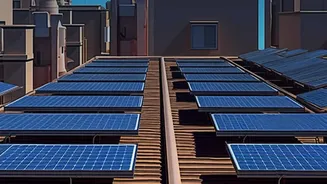
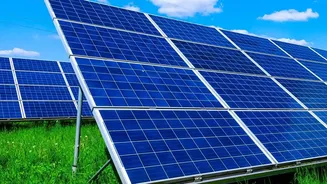
Solar panels are the workhorses of the renewable energy revolution, but they are not invincible. Day after day, they sit exposed to the elements, facing a constant barrage of UV radiation, extreme temperature swings, and moisture. Over time, this exposure takes a toll. The materials that make up the solar cells and their protective casings begin to degrade, a process known as photo-degradation. This gradual breakdown reduces the panel's efficiency, meaning it converts less sunlight into electricity. It also shortens its operational lifespan. For an industry built on long-term investment and reliability, protecting this critical infrastructure from its biggest enemy—the very sun it's meant to harness—is a multi-billion dollar challenge.
A Protective Shield from the Deep
This is where bio-synthetic melanin comes in. When applied as a thin, protective film or coating to solar infrastructure, it acts as a formidable shield. Its molecular structure is uniquely suited to absorb a wide range of light energy, particularly the high-energy UV rays that cause the most damage. Instead of allowing that radiation to penetrate and harm the sensitive components of the solar panel, the melanin layer absorbs it and safely dissipates the energy, often as harmless heat. Think of it as giving a solar panel a permanent, high-performance layer of sunscreen. Furthermore, melanin is a natural semiconductor, meaning it can conduct electricity under certain conditions, a property that researchers are exploring to not only protect but also potentially enhance the performance of electronic devices.
From Natural Inspiration to Scalable Tech
While the melanin found in squid ink provides a perfect blueprint, extracting it from nature isn't viable for mass production. The real breakthrough lies in synthetic production. Researchers can now create melanin in a lab that not only mimics the natural version but can also be fine-tuned for specific properties. Recent advancements, for instance, have managed to increase the electrical conductivity of synthetic melanin by a billion-fold, opening the door for its use in advanced bio-electronics. This process allows for the creation of stable, consistent melanin-based materials that can be applied as coatings or integrated into composites. This leap from the natural world to the factory floor is what makes melanin a commercially promising solution for the renewable energy sector, not just a scientific curiosity.
The Eco-Friendly Advantage
Using a material inspired by squid ink to protect solar panels offers a compelling advantage beyond just durability. It aligns perfectly with the sustainable ethos of renewable energy. Many conventional protective coatings and electronic materials are made from petroleum-based plastics or contain toxic elements that create disposal challenges at the end of their life. Melanin, by contrast, is fundamentally an organic polymer. It is non-toxic, biocompatible, and fully biodegradable. This means that at the end of a solar panel's extended life, its protective melanin layer can break down naturally without harming the environment. It represents a shift toward a circular economy, where even the materials used to build our green infrastructure are themselves green.