






A Rising Tide of Threats
For the millions living along India's eastern coast, the monsoon season is increasingly a time of anxiety. Climate change has led to more frequent and intense cyclonic storms brewing in the Bay of Bengal. These super-storms bring not only high-velocity
winds but also devastating storm surges—walls of seawater pushed inland, which inundate homes, poison agricultural fields with salt, and destroy livelihoods. States like Odisha and West Bengal are on the frontline of this crisis, where coastal communities, often the most economically vulnerable, bear the brunt of nature's fury. While concrete sea walls and embankments have been part of the traditional response, they are expensive, prone to failure, and offer few, if any, ecological benefits.
Nature's Frontline Defence
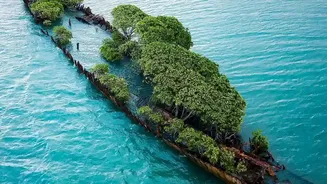
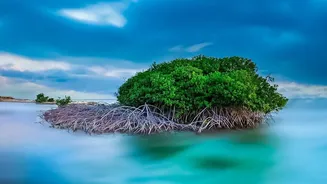
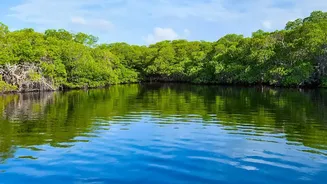
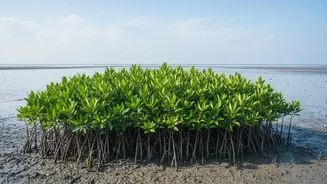
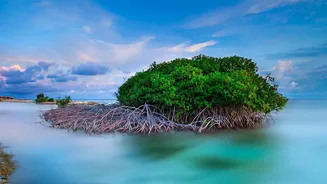
Enter the humble mangrove, a remarkable tree or shrub that thrives in the brackish, intertidal zones where land meets sea. These unique forests are now being recognised and cultivated as 'bio-shields'. Their dense, complex network of prop and aerial roots acts as a natural breakwater, absorbing and dissipating the energy of storm-driven waves. Studies have shown that a sufficient width of healthy mangrove forest can significantly reduce the height and force of a storm surge. The tangled roots also trap sediment, stabilising the shoreline and preventing erosion. Unlike a concrete wall, this green infrastructure is self-maintaining and grows stronger over time.
Green Shields in Action
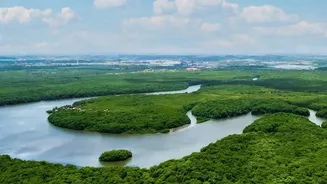
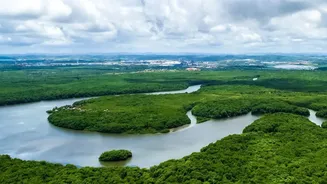
Across the eastern coast, from the vast Sundarbans in West Bengal to the Bhitarkanika sanctuary in Odisha, mangrove restoration is becoming a cornerstone of climate adaptation strategy. In Odisha, the Enhancing Climate Resilience of India's Coastal Communities (ECRICC) project, a joint effort by the government, UNDP, and the Green Climate Fund, is a prime example. This initiative combines scientific analysis—like mapping degraded areas and testing soil salinity—with local participation to restore hectares of these vital coastal forests. After Cyclone Yaas in 2021 left farmland saline and unusable in villages like Bichitrapur, community-led planting has started to rebuild the green barrier that protects them.
The Human Element
The success of these projects lies not just in planting trees, but in empowering people. Local communities, who have lived alongside these ecosystems for generations, possess invaluable traditional knowledge. Projects are increasingly integrating this wisdom, involving villagers in every step from collecting seeds and managing nurseries to planting and monitoring the young saplings. This community-led model fosters a deep sense of ownership, ensuring the long-term sustainability of the forests. Significantly, women are at the forefront of this movement, forming groups like the 'Women for Mangroves Initiative' in Puri, and taking on leadership roles in conservation, creating a new generation of coastal custodians.
More Than Just a Wall
The benefits of mangrove bio-shields extend far beyond storm protection. These forests are biodiversity hotspots, acting as critical nursery grounds for a vast array of fish, crabs, and shrimp. This directly supports the livelihoods of local fishing communities. By ensuring healthier fish stocks, the mangroves provide a sustainable source of income and food security. Furthermore, mangroves are champions of carbon sequestration, capturing and storing vast amounts of carbon dioxide from the atmosphere—up to four times more per hectare than terrestrial tropical forests. This makes their protection and restoration a vital tool in the global fight against climate change.