




The Sun's Violent Outbursts
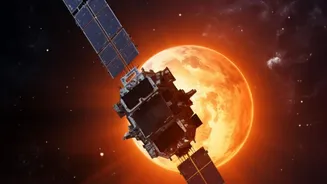
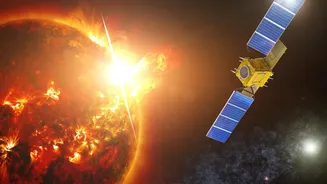
Solar storms are powerful eruptions of energy and matter from the Sun. The two main types that threaten our technology are solar flares and coronal mass ejections (CMEs). A solar flare is an intense burst of radiation, while a CME is a massive cloud of magnetised
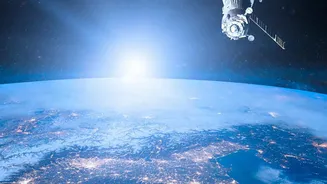
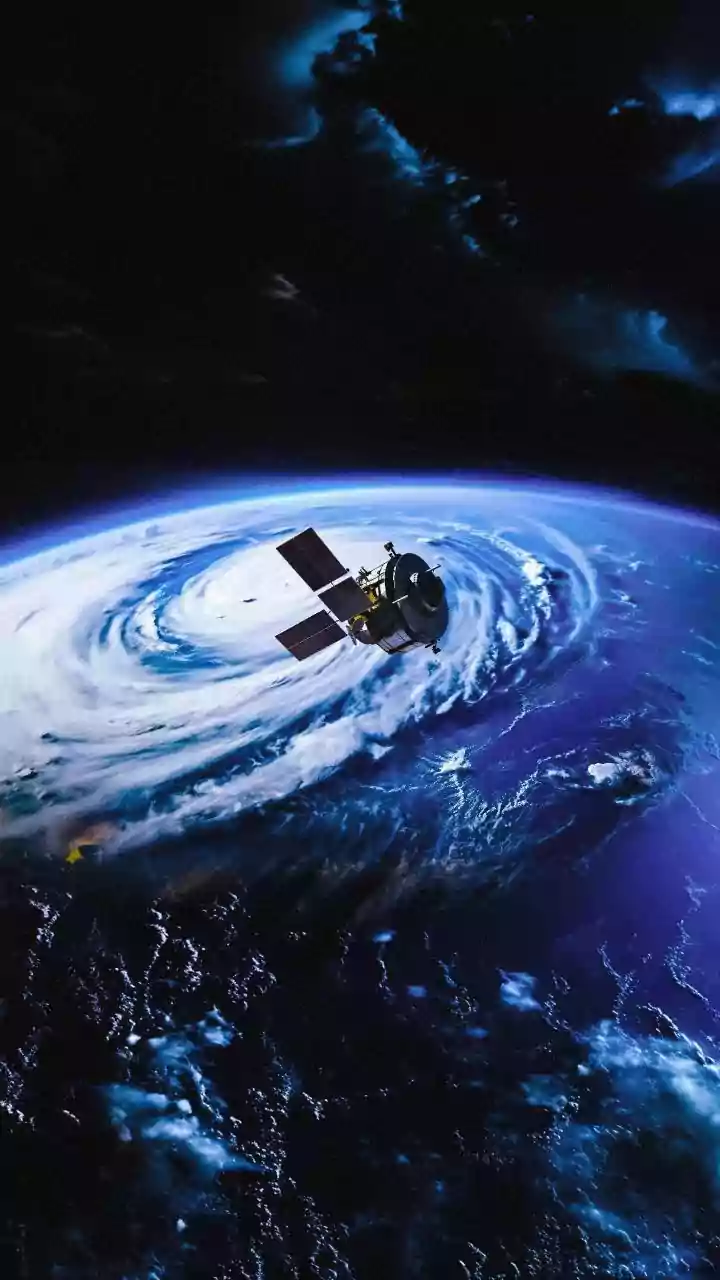
plasma hurled into space at high speed. When these phenomena are directed at Earth, they can have significant consequences. This 'space weather' interacts with Earth's magnetic field and upper atmosphere, causing geomagnetic storms that can disrupt power grids, communications, and, most critically, the thousands of satellites orbiting our planet.
Why Satellites Are So Vulnerable
Satellites are particularly vulnerable because they operate outside the full protection of Earth's atmosphere. A geomagnetic storm can affect them in several ways. Firstly, it heats and expands the upper atmosphere, increasing atmospheric drag on satellites in Low-Earth Orbit (LEO). This increased friction can cause them to lose altitude and even re-enter the atmosphere prematurely, as famously happened to dozens of Starlink satellites in 2022. Secondly, high-energy particles from a solar storm can damage a satellite's sensitive electronics, degrade its solar panels, and cause 'single-event effects' where a single particle can flip a memory bit or even destroy a component. Finally, the storm can cause electrostatic discharges, essentially tiny lightning strikes on the satellite's surface that can damage hardware.
The Watchtowers on the Ground
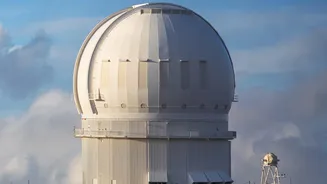
This is where ground-based space weather stations come in. These facilities, part of a global network, are our eyes on the Sun. They use a variety of instruments, including specialised solar telescopes, magnetometers, and radio antennas, to constantly monitor the Sun's activity. By observing changes in sunspots, detecting the signatures of CMEs, and measuring the solar wind, scientists can forecast the arrival of a solar storm. International bodies like the International Space Environment Service (ISES) coordinate data sharing between regional centres, including India's Regional Warning Centre (RWC) in New Delhi, to create a comprehensive, global picture of space weather conditions.
From Early Warning to Protective Action
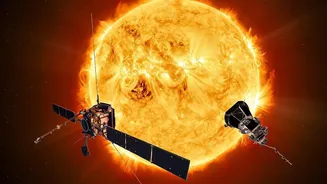
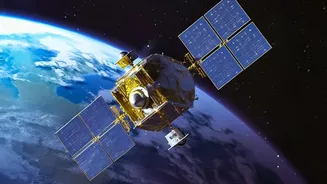
The data from ground stations, combined with information from space-based observatories, provides the crucial early warning needed to protect satellites. When a potentially hazardous event is detected, forecasting centres like NOAA's Space Weather Prediction Center (SWPC) issue alerts. Armed with this forecast, satellite operators can take defensive measures. One of the most common actions is to put a satellite into 'safe mode'. This involves shutting down all non-essential systems, particularly sensitive scientific instruments, and orienting the spacecraft to ensure its solar panels are getting power while protecting vital components. For some LEO satellites, operators might use onboard thrusters to raise their orbit slightly, creating a buffer against the increased atmospheric drag.
India’s Growing Role in the Global Shield
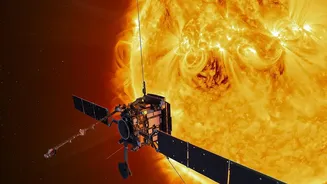
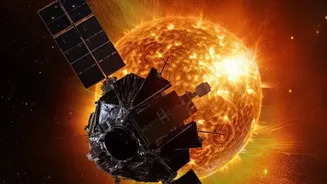
India plays an increasingly important role in this global effort. The Indian Space Research Organisation (ISRO) not only operates a significant fleet of satellites worth thousands of crores but also contributes vital data to the worldwide network. Ground-based facilities under the Indian Network for Space Weather Impact Monitoring (InSWIM) initiative provide crucial data on the ionosphere over the Indian region. Furthermore, ISRO's Aditya-L1 mission, India’s first space-based solar observatory, functions as a dedicated space weather station. Positioned 1.5 million kilometres from Earth, it gets an uninterrupted view of the Sun, providing real-time data on solar activity and the solar wind before it reaches our planet. This data is invaluable for predicting geomagnetic storms and protecting India's vital space assets.