







The Science of Sticky Skin
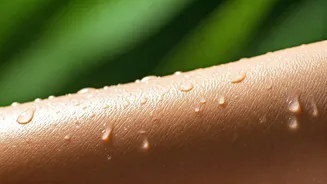
When humidity levels rise, the air is saturated with water vapour. This makes it harder for your sweat to evaporate, leaving a sticky layer on your skin. [22] This warm, moist environment triggers your sebaceous glands to produce more oil (sebum). [12,
16] This excess oil, combined with sweat and environmental pollutants, creates a perfect storm for clogged pores, leading to blackheads, acne, and a perpetually greasy feeling. [12, 16] This process can also weaken the skin's natural barrier, making it more susceptible to irritation and infections. [2, 21]
The Rise of Acne and Breakouts
For those with oily or acne-prone skin, the monsoon can be particularly challenging. The increased sebum production provides an ideal food source for acne-causing bacteria. [3] When pores become clogged with oil and dead skin cells, it results in breakouts on the face, chest, and back. [23] To manage this, it's crucial to cleanse your face twice daily with a gentle, mild cleanser to remove the excess oil and grime without stripping the skin. [21, 24] Look for products containing salicylic acid, a beta-hydroxy acid (BHA) that exfoliates inside the pores to prevent congestion. [25, 26]
Beware of Fungal Infections
High humidity doesn't just encourage bacteria; it's also a breeding ground for fungi. [2, 3] This is why fungal infections like ringworm, athlete's foot, and Malassezia folliculitis (often called 'fungal acne') become more common during the rainy season. [2, 4, 16] Fungal acne appears as small, itchy, uniform bumps, often on the forehead, chest, and back. [4, 5] Unlike regular acne, it's caused by an overgrowth of yeast in the hair follicles. [5, 7] To prevent these issues, it's vital to keep your skin as dry as possible. Wear loose, breathable cotton clothing, change out of damp clothes quickly, and consider using an antifungal powder in skin folds. [2, 21]
The Paradox of Dehydrated Skin
It might sound counterintuitive, but your skin can become dehydrated even when the air is moist. [9] While the surface of your skin may feel oily or sticky, the high humidity can disrupt your skin's barrier function, leading to increased transepidermal water loss (TEWL) — where water evaporates from the skin. [18] This can leave your skin feeling tight, dull, and sensitive. [9] Skipping moisturiser is a common mistake that can worsen the problem, as your skin may produce even more oil to compensate. [12] The key is to switch to a lightweight, non-comedogenic, gel-based moisturiser. [24, 27] Ingredients like hyaluronic acid and glycerin are excellent as they pull moisture from the air into your skin, providing hydration without heaviness. [14, 27]
Your Monsoon-Proof Skincare Swaps
Adapting your routine is essential. First, switch to a gel-based or foaming cleanser to manage oil. [17] Second, incorporate gentle exfoliation 2-3 times a week to keep pores clear. [22] Third, use a lightweight, oil-free moisturiser. [20, 24] Look for water-based serums containing niacinamide, which helps regulate oil production and improve skin texture. [6, 15, 25] Finally, don't skip sunscreen. UV rays penetrate through clouds, and sun protection is crucial year-round to prevent damage and hyperpigmentation that can follow monsoon breakouts. [8, 27] Opt for a non-greasy, gel-based sunscreen to avoid a heavy feel. [17]