






The Heart of the Engine
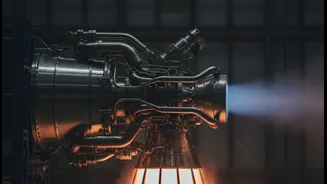
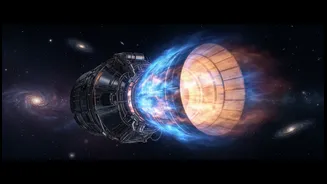
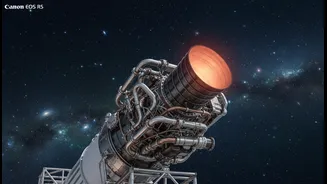
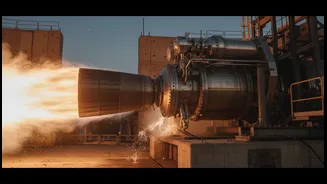
Think of a rocket engine as a complex machine with many parts working in perfect harmony. The 'power-head' is essentially its heart. This critical assembly consists of the turbopumps, a pre-burner, and the control systems. Its job is to suck in propellants—in
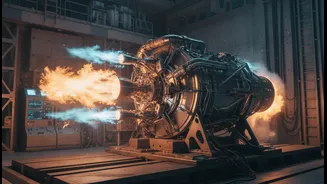
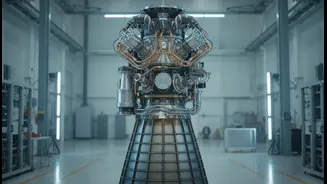
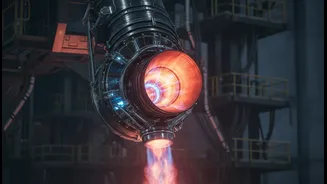
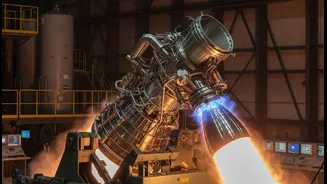
this case, refined kerosene and liquid oxygen—and feed them into the main combustion chamber under immense pressure. The recent test at the ISRO Propulsion Complex (IPRC) in Mahendragiri focused solely on this power-head test article (PHTA), deliberately excluding the main thrust chamber to isolate and verify the performance of these core components. By successfully testing this 'heart,' engineers gain confidence that the full engine will perform as designed.
Why Semi-Cryogenic is a Game Changer
The engine in question is the SE-2000, a semi-cryogenic powerhouse. Unlike fully cryogenic engines that use super-cooled liquid hydrogen and liquid oxygen, a semi-cryogenic engine uses liquid oxygen as the oxidiser and a refined, rocket-grade kerosene (called Isrosene) as fuel. This has major advantages. Kerosene doesn't need to be stored at extremely low temperatures, making it safer, easier to handle, and less complex logistically. This combination also provides higher thrust and efficiency compared to the earth-storable liquid propellants used in rockets like the PSLV. The goal for the SE-2000 is to generate 2,000 kilonewtons (or about 200 tonnes) of thrust, making it the most powerful liquid engine ISRO has ever built.
What Engineers Were Verifying
The 175-tonne test was the eighth in a series and by far the most ambitious, pushing the hardware to 88% of its designed maximum thrust for the first time. Previous tests had only gone up to 60% (120 tonnes). The main objectives were to study how the system behaves as it powers up and to demonstrate stable operation at this higher thrust level. Engineers closely monitored crucial parameters like the performance of the main turbopumps, which had to successfully deliver propellant at immense pressures of 400 and 500 bar. ISRO confirmed that the test proceeded exactly as predicted, with all engine parameters remaining within expected ranges, giving them the data and confidence needed to plan for a full 100% (200-tonne) power-head test.
Powering India's Heaviest Rocket
This new engine is not just an experiment; it's a strategic upgrade for India's space capabilities. The SE-2000 is being developed to power the new Semi-Cryogenic Propulsion Stage (SC120). This stage is slated to replace the current L110 core stage of the Launch Vehicle Mark-3 (LVM3), India's heaviest and most powerful rocket. The LVM3 is the same vehicle that launched Chandrayaan-3 and is designated as the launch vehicle for the Gaganyaan human spaceflight mission. By swapping the old core stage with the more powerful semi-cryogenic one, the LVM3's payload capacity is expected to increase significantly—from 4 tonnes to 5 tonnes into Geostationary Transfer Orbit. This means India can launch heavier communication satellites and more ambitious deep-space missions on its own.
The Road to Gaganyaan and Beyond
While the existing LVM3 configuration is already human-rated for the initial Gaganyaan missions, the development of the semi-cryogenic engine is about securing India's future in space. A more powerful and efficient rocket reduces mission costs and reliance on foreign launch providers for heavy satellites. After mastering the power-head, the next major step is to integrate it with the thrust chamber and other remaining components for a full engine hot test. Following that, the entire SC120 stage with the integrated engine will undergo rigorous qualification tests. This successful 175-tonne test is a critical milestone, proving the core design and moving ISRO one giant step closer to a new era of heavy-lift launch capability.