








Why Your Dhaniya Dies So Fast
Before we get to the solution, let’s understand the problem. Fresh coriander, or dhaniya, is incredibly delicate. Its thin leaves and tender stems lose moisture to the air very quickly, a process called transpiration. This moisture loss is what causes
wilting. At the same time, the plastic bag it often comes in traps ethylene gas—a natural ripening agent—and excess moisture, which encourages rot and a slimy texture. Your refrigerator, designed to be dry, can also dehydrate the unprotected leaves. The key to long-lasting dhaniya is to control its moisture level perfectly: not too dry, not too wet.
The Ultimate Freshness Method
This method is the gold standard for preserving delicate herbs like coriander and parsley. It addresses both moisture loss and rot, creating a perfect little micro-environment for your dhaniya. It requires just a few minutes of prep but will reward you with fresh herbs for up to three, sometimes even four, weeks. You will need your bunch of dhaniya, paper towels, and an airtight container or a zip-top bag.
Step 1: Prep the Dhaniya Correctly
Start by removing the rubber band or string holding the bunch together. Go through the leaves and pick out any that are already yellowed, slimy, or wilted. These will only speed up the decay of the healthy leaves. Do NOT wash the dhaniya yet. Washing it before storage introduces excess moisture that will promote rot. You should only wash your herbs right before you use them. If your dhaniya is wet from the market, gently pat it dry with a paper towel or give it a quick, gentle spin in a salad spinner.
Step 2: Wrap for Freshness
Lay a dry paper towel on your counter. Spread the coriander leaves in a single, loose layer across it. Place another dry paper towel on top. Gently roll the dhaniya and paper towels together, like you’re rolling a Swiss roll. The paper towel serves a dual purpose: it wicks away any excess moisture that could cause rot while also protecting the leaves from drying out. It creates a breathable but humid environment that is ideal for the herb.
Step 3: Store in an Airtight Container
Place the wrapped dhaniya roll into an airtight container or a large zip-top bag. If using a bag, gently press out most of the air before sealing it. This prevents the leaves from being crushed and further protects them from the dry air of the refrigerator. Store the container in your fridge’s crisper drawer, which is usually the most humid part of your fridge. Every few days, check the paper towels. If they feel very damp, replace them with fresh dry ones to prevent rot.
Alternative Method: The Dhaniya Bouquet
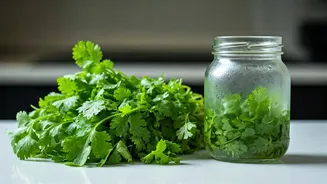
If you plan to use your dhaniya within a week, this method works well and looks lovely. Trim the very ends of the coriander stems. Fill a small jar or glass with an inch of water, just like you would for a bouquet of flowers. Place the dhaniya bunch, stem-side down, into the water. Loosely cover the top with a plastic bag to create a mini-greenhouse effect. Change the water every couple of days. This method keeps the herb hydrated but is less effective for long-term storage than the paper towel method.
For Even Longer Storage: Freeze It
If you have a huge amount of dhaniya you can’t use in time, freezing is your best bet. Finely chop the clean, dry dhaniya. You can then pack it tightly into an ice cube tray, top it off with a little water or olive oil, and freeze. Once frozen, pop the cubes out and store them in a freezer bag. This way, you can drop a cube directly into curries, dals, or soups for a burst of fresh flavour months later. The texture won't be the same as fresh, so this is best for cooked dishes.