



The Challenge of Living Off-World
For any long-term space mission, logistics are a massive hurdle. Every kilogram of supplies—from food and water to breathable air and rocket propellant—must be launched from Earth. This process is incredibly expensive and limits the scope and duration
of missions. To create a sustainable base on the Moon, as envisioned by NASA's Artemis program, astronauts cannot rely solely on resupply missions from home. They need a way to live off the land, a concept known as in-situ resource utilization (ISRU). Among the most critical resources is oxygen, not just for breathing, but as a key component of rocket fuel needed for trips back to Earth or further into the solar system.
An Unexpectedly Rich Source of Air
At first glance, the Moon appears to be a barren, airless world. However, its surface is covered in a layer of fine dust and crushed rock called regolith, which holds a surprising secret. Lunar regolith is made of 40-45% oxygen by weight. This isn't free-floating oxygen gas; it's chemically locked inside oxide minerals like silica, aluminum, and iron oxides. The sheer abundance of this material means the Moon's surface contains a vast, untapped reservoir of breathable air. The challenge, which scientists at NASA, the European Space Agency (ESA), and private companies are actively working to solve, is how to efficiently break those strong chemical bonds to release the oxygen.
The Science of 'Mining' for Oxygen
Several methods are being developed to extract this lunar oxygen, but one of the most promising is electrolysis. One technique, known as molten salt electrolysis, involves heating the regolith to very high temperatures (around 950°C) within a chamber containing a molten salt. An electrical current is then passed through the mixture. This current breaks the chemical bonds of the metal oxides, causing the oxygen to separate and collect at an electrode, where it can be captured. Another related process, molten regolith electrolysis, heats the soil until it melts before applying electricity. NASA is also developing a process called carbothermal reduction, which uses concentrated solar power to heat the regolith and drive the chemical reaction. Recent tests have successfully demonstrated these principles using simulated lunar soil, proving the concept is viable.
More Than Just Breathing Room
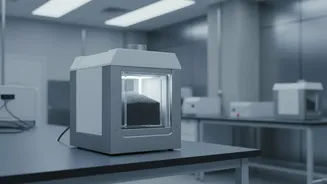
The benefits of this technology extend far beyond providing air for astronauts. The oxygen produced can be liquified and used as an oxidizer for rocket propellant, effectively turning the Moon into a refueling station for missions to Mars and beyond. This drastically reduces the mass that needs to be launched from Earth, making deep space exploration more feasible and affordable. Furthermore, the extraction process leaves behind useful byproducts: a mixture of metal powders. These leftover metals, including iron, aluminum, and silicon, could one day be used in 3D printers to manufacture building materials, tools, and spare parts directly on the lunar surface. This would allow a moon base to not only sustain itself but also to grow and expand using local resources.
Paving the Way for a Permanent Lunar Future
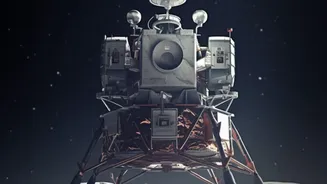
This technology is a cornerstone of NASA’s Artemis program, which aims to establish a long-term, sustainable human presence on the Moon. Both NASA and ESA are heavily invested, funding various projects and industrial partners to design and build demonstration payloads that can fly on upcoming lunar landers. Private companies like Blue Origin are also developing their own systems, signaling a broader commercial interest in a future lunar economy. By mastering the ability to generate oxygen from moon dust, space agencies are not just solving a logistical problem; they are unlocking the potential for a truly permanent human foothold on another world, turning a desolate landscape into a source of life and fuel for the next generation of explorers.