

The New Space Race is Commercial
The global space industry is undergoing a seismic shift. For decades, exploration was the domain of government agencies with sky-high budgets. Today, a new, more agile and cost-conscious commercial space race is underway, and Indian entrepreneurs are
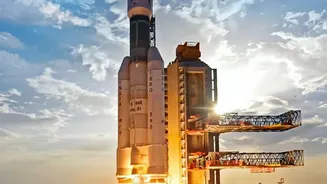
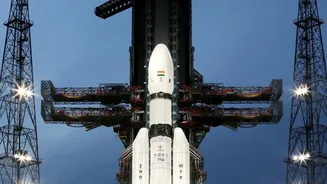
jumping in. Since the government opened up the space sector in 2020, the number of Indian space-tech startups has surged from a handful to over 330, attracting significant investment and talent. This private-sector boom is perfectly timed to support the Indian Space Research Organisation's (ISRO) ambitious goals, which include a lunar sample return mission (Chandrayaan-4), a domestic space station by 2035, and landing an Indian on the Moon by 2040. These grand plans create a massive opportunity for startups to build critical components, from rockets to rovers.
Meet India's Rover Pioneers
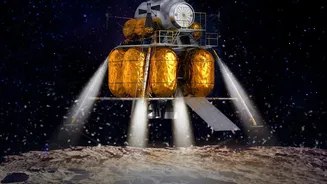
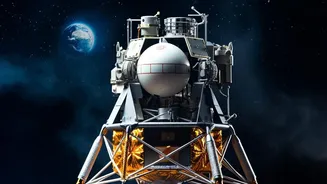
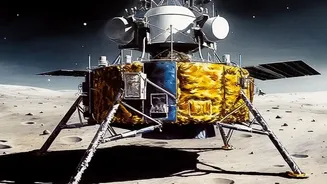
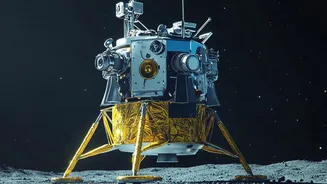
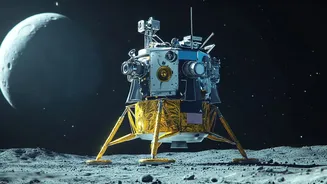
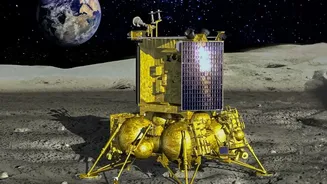
While many new companies are focusing on satellites and launch vehicles, a few are looking squarely at the lunar surface. One of the earliest pioneers was Bengaluru-based TeamIndus. Originally formed to compete in the Google Lunar XPrize, the company developed a lander and a lightweight rover named 'ECA', for 'Ek Choti Si Asha' (A Small Hope). Although the competition ended without a winner, TeamIndus's work laid a crucial foundation, proving that private Indian firms could design complex interplanetary hardware. Today, a new generation is emerging. Startups like Kepler Aerospace, founded by ISRO veterans, have founders with experience in lunar nano-rover projects from international collaborations. Others, like Bellatrix Aerospace, are developing advanced propulsion systems that are critical for in-space mobility, including for lunar missions.
The 'Low-Cost' Advantage
The key differentiator for these Indian startups is their focus on affordability. They are not just building rovers; they are engineering them to be cost-effective, a strategy that made ISRO famous. This 'frugal engineering' approach is achieved through several means. Firstly, using innovative manufacturing techniques like 3D printing, as pioneered by launch startups like AgniKul Cosmos, can drastically reduce component cost and production time. Secondly, leveraging a domestic supply chain and a rich pool of local engineering talent helps keep operational expenses down. Thirdly, designing smaller, modular rovers that can be deployed as part of a larger payload-sharing mission helps reduce the astronomical cost of a dedicated launch. This model, where a lander might carry payloads for multiple clients, is central to the business strategy.
A Global Market Beyond ISRO
While ISRO's Chandrayaan-4 is a primary target customer for these rover-builders, their ambitions are global. NASA's Commercial Lunar Payload Services (CLPS) program, which invites private companies to deliver science and technology to the lunar surface, represents a massive market. An affordable, reliable Indian rover could be an attractive payload for American lander missions. Furthermore, as nations from Europe to the UAE plan their own lunar missions, the demand for cost-effective rovers for prospecting, exploration, and logistics is set to explode. Indian startups are positioning themselves not just as suppliers to a domestic agency, but as competitive players in a burgeoning global cislunar economy.