

Peeking into Alien Atmospheres
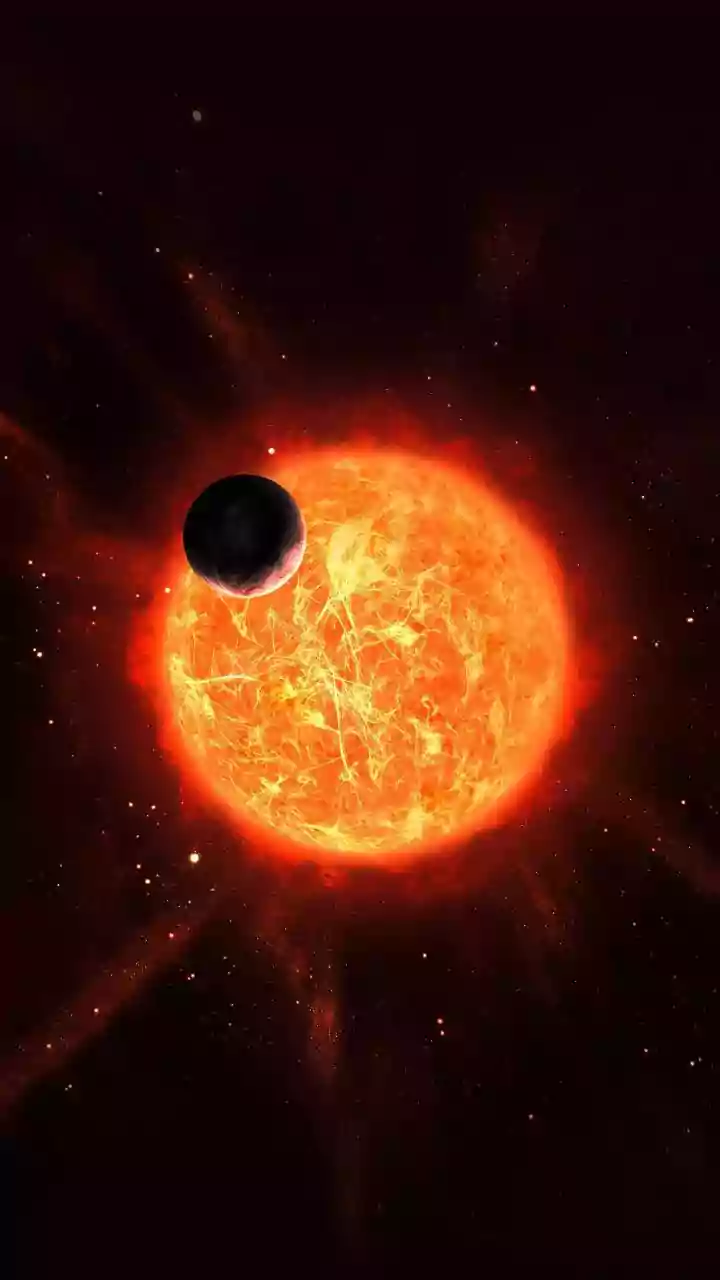
The game-changing technique at the heart of this revolution is called transit spectroscopy. It sounds complex, but the idea is elegant. When an exoplanet—a planet outside our solar system—passes in front of its host star from our perspective, a tiny fraction
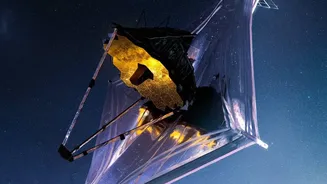
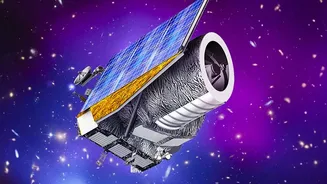
of the starlight filters through the planet's atmosphere. Telescopes like the James Webb Space Telescope (JWST) are sensitive enough to capture this filtered light. By splitting that light into its constituent colours, or a spectrum, scientists can see which colours are missing. These missing pieces are the key; different gases in an atmosphere absorb specific wavelengths of light, leaving a unique chemical 'fingerprint'. This allows astronomers to determine the composition of an atmosphere on a world they will never directly visit.
The Chemical Fingerprints of Life
So, what are scientists looking for in these distant atmospheric fingerprints? They are hunting for biosignatures—gases or combinations of gases that indicate the presence of biological processes. On Earth, life has fundamentally altered our atmosphere, filling it with gases like oxygen, methane, and nitrous oxide. Finding a similar mix elsewhere would be a monumental discovery. One of the most sought-after biosignatures is oxygen, a highly reactive gas that, on Earth, is overwhelmingly sustained by photosynthesis. However, scientists are also looking for more subtle clues. For example, the simultaneous presence of methane and carbon dioxide can be a strong biosignature, as these two gases would normally react and not coexist in large amounts without a constant source, such as microbial life.
JWST: From Theory to Tentative Detections
The launch of the James Webb Space Telescope has moved this search from the theoretical to the practical. JWST is far more powerful than its predecessors, capable of capturing the high-resolution data needed to identify these faint signals. It has already successfully detected carbon dioxide and water vapour in the atmospheres of several exoplanets. More tantalizingly, recent observations of the exoplanet K2-18b, a 'Hycean' world potentially covered in oceans, revealed hints of dimethyl sulfide (DMS). On Earth, DMS is only known to be produced by life, primarily marine microbes like phytoplankton. While researchers are cautious and stress that this is not definitive proof—stressing that unknown abiotic processes could be at play—it represents one of the most promising biosignature candidates found to date.
The Challenge of a 'Silver Bullet'
Despite these exciting advances, the search for extraterrestrial life is not about finding a single 'silver bullet' gas. Context is everything. Scientists must rule out any non-biological processes that could mimic a biosignature. For example, oxygen can be produced by sunlight breaking down water molecules, and methane can be released by geological activity. The true revolution lies in the ability to analyze the atmospheric system as a whole. A discovery of life will likely come from observing a profound chemical disequilibrium—an atmospheric mixture that simply cannot be explained by geology and chemistry alone, pointing toward a biological engine constantly replenishing it. Even with JWST's power, confirming these signals is an immense challenge that will require refined models and, likely, even more advanced future observatories.