


Start with a Strong Foundation
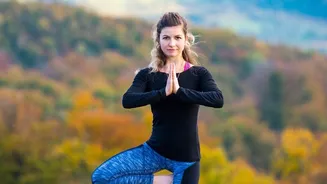
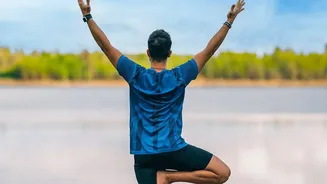
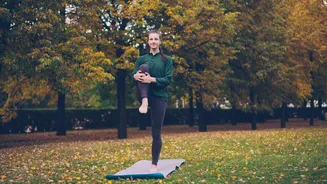
Like a tree, your strength starts from the ground up. Begin in Mountain Pose (Tadasana) with your feet together or hip-width apart. Distribute your weight evenly across both feet. Before you lift a leg, focus on rooting down through your standing leg.
Engage the thigh muscles to lift the kneecap and create a solid, stable base. This simple act of 'zipping up' the standing leg is crucial for preventing wobbles before they start. Keeping the standing leg strong and straight, but not locked, provides the trunk for your tree.
The Golden Rule of Foot Placement
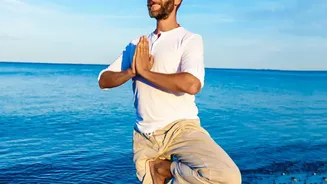
The most critical safety cue in Tree Pose is where you place your lifted foot: never press it directly on your knee joint. The knee is not designed to handle sideways pressure, and doing so can weaken ligaments over time. Instead, you have several safer options. Beginners can start by placing the sole of the foot on the inner ankle or the inner calf. If and when you feel stable enough, you can use your hand to guide the foot to the upper inner thigh. The key is to actively press the foot into the leg and the leg into the foot, creating a stable connection that helps with balance.
Find Your Focus and Breathe
Balancing poses are as much a mental exercise as a physical one. To help maintain your stability, find a 'drishti', or a fixed, unmoving point to gaze at in front of you at eye level. Keeping your eyes soft but focused helps to calm a distracted mind, which is often the cause of a wobbly pose. Your breath is your anchor. Inhale as you lengthen your spine and reach tall, and exhale as you feel yourself rooting down. Try to maintain slow, steady breaths. Holding your breath will create tension and make balancing much harder.
Beginner-Friendly Variations and Support
There is no prize for doing the most advanced version of a pose on your first try. The goal is to build strength and stability safely. If you're struggling to balance, use a wall or a sturdy chair for support. Stand with the wall or chair beside you and rest a hand lightly on it to help you stabilize. Another excellent modification is the 'kickstand' version: place your heel on your standing ankle and keep the toes of your lifted foot on the floor. This allows you to practice the alignment and hip-opening aspects of the pose without the full balance challenge. You can also bring your hands to a prayer position at your chest instead of overhead, which can feel more grounding.
Common Mistakes to Avoid
Besides placing the foot on the knee, there are a few other common misalignments to watch for. Many people hike up the hip of their bent leg; instead, try to keep both hips level and facing forward. This ensures you are not creating strain in your lower back. Another tendency is to lean the torso to one side. Actively engage your core muscles by drawing your lower belly in and up; this will help keep your torso upright and centered over your standing leg. Finally, avoid shrugging your shoulders up toward your ears. Keep your shoulders relaxed and down, creating space in your neck.