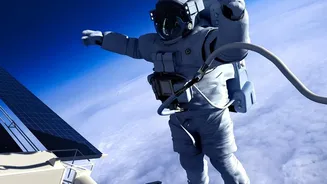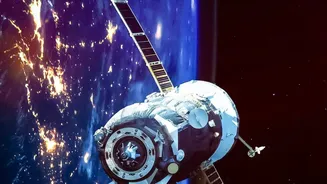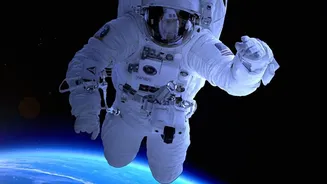



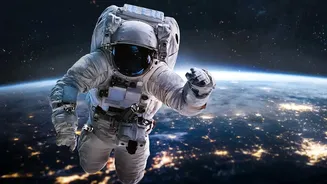
The image is iconic: an astronaut, smiling, floating effortlessly inside a spacecraft. It looks like a dance in zero gravity. But what if 'floating' is the wrong word? The truth is a far more elegant and dynamic feat of physics.
The Myth of Zero Gravity
First, let's clear up the
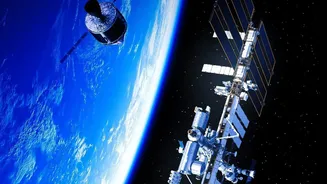
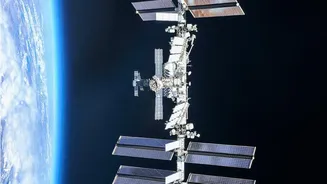
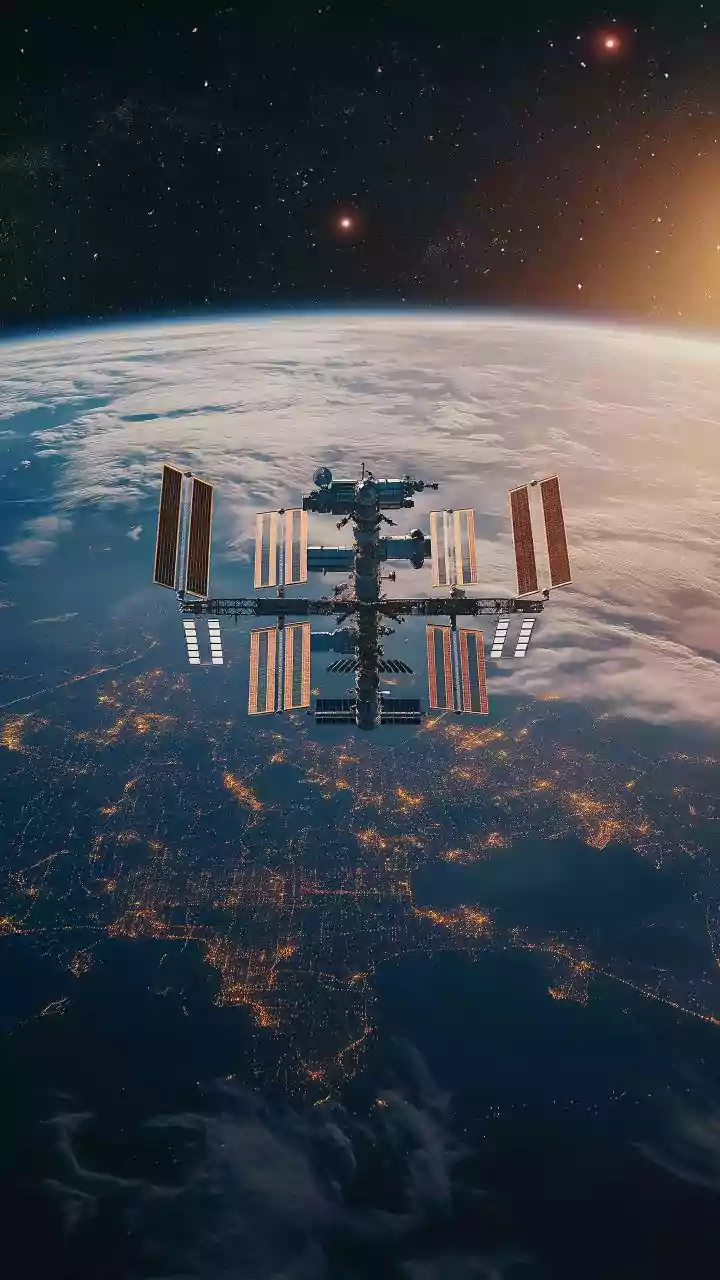
biggest misconception. Astronauts on the International Space Station (ISS) are not floating because they’ve escaped Earth’s gravity. The ISS orbits at an altitude of about 250 miles. At that height, Earth's gravitational pull is still about 90% as strong as it is on the surface. If you weigh 180 pounds on the ground, you'd weigh about 162 pounds on the station. Gravity is very much still in charge. If it weren’t, the station and everyone in it would fly off in a straight line into deep space. The reason they appear weightless has nothing to do with the absence of gravity and everything to do with motion.
Einstein's Elevator Ride
To understand what’s really happening, let's turn to a classic thought experiment from Albert Einstein. Imagine you are in an elevator and the cable snaps. For the few terrifying seconds you are in free fall, what do you feel? You, the elevator car, and the phone that slips from your hand are all falling at the same rate. If you were to look at your phone, it would appear to hover in front of you, perfectly still relative to your position. You would feel 'weightless' inside your falling frame of reference. This is the key: 'weight' isn't just gravity pulling on you; it's the sensation of a surface, like the floor, pushing back. In free fall, there is no pushback.
What Is an Orbit, Really?
An orbit isn't about going 'up' until gravity disappears. It's about going sideways extremely fast. Imagine standing on a very tall mountain and firing a cannonball. A slow shot will arc and hit the ground. A faster shot will travel further before landing. But if you fire it at the perfect speed—about 17,500 miles per hour for the ISS—something magical happens. As the cannonball falls towards Earth, the planet's curved surface drops away beneath it at the exact same rate. The cannonball is constantly falling, but it never gets any closer to the ground. It is perpetually missing the Earth. This state of continuously falling without ever landing is what we call an orbit.
Centripetal Fall: The Unbroken Plunge
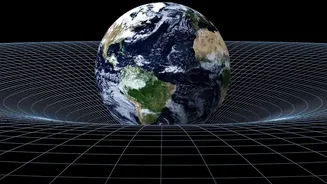
This brings us to 'unbroken centripetal fall'. The force keeping the ISS and the astronauts from flying off into space is gravity, which acts as a centripetal force. 'Centripetal' simply means 'center-seeking.' Gravity is constantly pulling the spacecraft toward the center of the Earth, forcing its path to curve instead of remaining straight. So, the ISS and everything inside it are in a continuous, high-speed state of free fall. The astronauts, the computers, their dinner—it's all falling together around the Earth. Just like in the broken elevator, because everything is accelerating downward at the same rate, they float relative to each other. The illusion is 'floating'; the reality is an endless, high-velocity plunge that they can never complete.