




What Exactly Is Table Sugar?
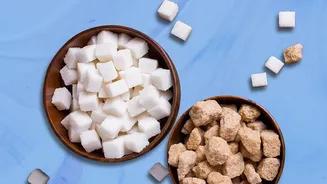
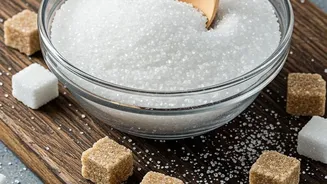
Table sugar, or sucrose, is a simple carbohydrate refined from sugarcane or sugar beets. Chemically, it's a disaccharide, which means it's made of two sugar molecules bonded together: one glucose and one fructose in a neat 50/50 split. When you eat sugar, your
body needs to break this bond before it can use the glucose and fructose for energy. This industrial processing strips away any other nutrients, which is why you often hear it described as providing 'empty calories'—it offers energy but no vitamins, minerals, or antioxidants.
Deconstructing Honey
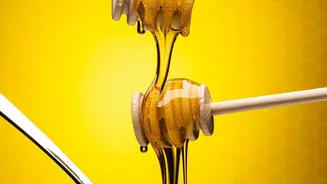
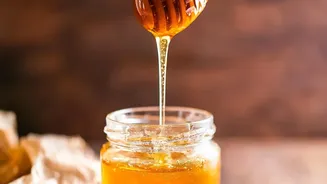
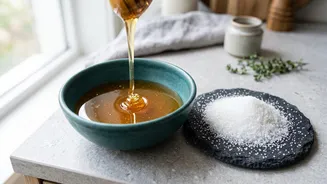
Honey, on the other hand, is a more complex substance. It is also primarily made of sugars—about 80%—but with a different structure. Instead of being bonded together, the glucose and fructose in honey are mostly separate molecules called monosaccharides. The typical ratio is about 40% fructose and 30% glucose, with the rest being water and small amounts of other compounds. These other components include trace vitamins, minerals, amino acids, and beneficial antioxidants like flavonoids, which are absent in refined sugar.
The Crucial Definition of 'Free Sugars'
This is where the debate gets interesting. According to the World Health Organization (WHO), 'free sugars' are not just the sugars added by a cook or manufacturer. The definition also includes sugars naturally present in honey, syrups, fruit juices, and fruit juice concentrates. The term 'free' refers to the fact that these sugars are not locked within the cellular structure of a whole food, like the sugars in an apple or a carrot. Because they are unbound, the body can absorb them rapidly. Health authorities recommend limiting free sugars because excessive intake is linked to weight gain and other health issues.
Honey vs. Sugar: The Free Sugar Verdict
So, how do they stack up? From a dietary guidelines perspective, both honey and table sugar are classified as free sugars. When you add either to your tea, toast, or recipes, your body treats them similarly in terms of their contribution to your daily free sugar intake. While table sugar’s molecules need to be split, the process is very quick. Honey's sugars are already separated, making them readily available for absorption. The bottom line is that health guidelines advise moderating your intake of both.
Beyond Sugar: Is There a Winner?
While both are considered free sugars, honey does have a slight edge. It has a marginally lower glycemic index (GI) on average than sugar (around 58 for honey versus 65 for sugar), meaning it raises blood sugar a bit more slowly, although this can vary widely depending on the honey's floral source. Honey is also sweeter than sugar due to its higher fructose content, so you might use less to achieve the same level of sweetness. Furthermore, raw honey contains trace amounts of enzymes, antioxidants, and minerals that refined sugar lacks. These additional compounds may offer minor health benefits, like anti-inflammatory and antimicrobial properties. However, it's important to note that a tablespoon of honey actually has more calories and more total sugar than a tablespoon of granulated sugar, simply because it is denser.