







The Calorie Question: A Near-Identical Count
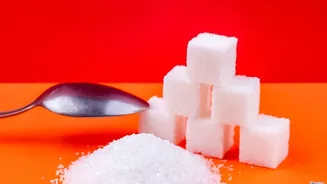
The first myth to bust is that swapping sugar for jaggery will help with weight loss. From a calorie perspective, they are almost identical. One hundred grams of jaggery contains around 383 calories, while the same amount of white sugar has about 387
calories. This negligible difference means that switching to jaggery is not a low-calorie move. Both are dense sources of energy and should be consumed with moderation in mind.
Where Jaggery Pulls Ahead: Minerals and Molasses
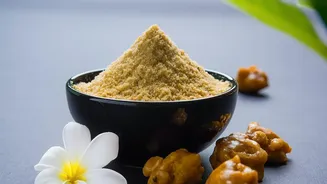
The primary difference lies in the processing. White sugar is highly refined, stripping it of everything but pure sucrose, making it a source of 'empty calories'. Jaggery, being unrefined, retains the molasses from sugarcane juice. This molasses contains trace amounts of essential minerals like iron, magnesium, and potassium. While jaggery is nutritionally superior in this regard, the amounts of these minerals in a typical serving (one or two teaspoons) are quite small and don't make it a health food.
The Traditional Winter Warmer
In many Indian households, jaggery is a winter staple for a reason. Traditionally, it's believed to have a warming effect on the body. It is often used in remedies for coughs and colds, helping to soothe a dry throat and clear the respiratory tract. This is why you'll find it in winter preparations like 'kadha' (herbal decoctions) and sweets like 'til-gud' (sesame and jaggery ladoos), which are designed to provide warmth and energy during the colder months.
The Glycemic Index Reality Check
This is where one of the biggest myths about jaggery is debunked. Many believe it is safer for people with diabetes, but data suggests otherwise. The Glycemic Index (GI), which measures how quickly a food raises blood sugar, is actually high for jaggery—often cited as being around 84. This is even higher than white sugar, which has a GI of around 65. This means jaggery can cause a more rapid spike in blood sugar levels, making it an unsuitable choice for individuals managing diabetes who must limit both sweeteners equally.
The Verdict: It’s About the Bigger Picture
Focusing solely on whether to use jaggery or sugar misses the larger point about a healthy diet. While jaggery has a slight nutritional edge due to its mineral content, it is still, by definition, a sugar. Health experts agree that the most important factor is reducing the total amount of added sweeteners in your diet, regardless of the source. The benefits of a balanced diet rich in whole foods, regular exercise, and portion control far outweigh the marginal difference between these two sweeteners. A safe daily intake for a healthy adult is generally considered to be around 10-20 grams.