






As artificial intelligence becomes more powerful, so do concerns about its potential for harm. In a major move to address these risks, OpenAI has unveiled a new safety system called 'Control Room' for its internal research infrastructure.
What is the Control Room?
The Control Room
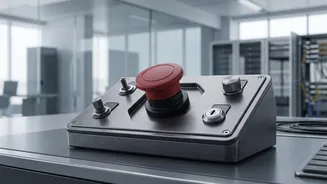
is a centralised safety architecture designed to monitor all internal research workloads at OpenAI. Think of it as an emergency 'kill switch'. If a monitoring system detects that an AI model is behaving in a harmful or unintended way during training or evaluation, the Control Room can step in and cut off the model's output. This intervention is designed to happen rapidly, with OpenAI stating it can halt a model's output within 35 seconds of receiving a stop instruction. The system is specifically built for OpenAI's most advanced research, where new and unpredictable AI behaviours are most likely to emerge.
Why Was This System Created?
The push for greater control over AI models comes amid growing concerns from the public, governments, and researchers about the potential for misuse. As models become more capable and autonomous, there is a risk they could be used for malicious purposes, generate dangerous misinformation, or simply behave in ways their creators never anticipated. The Control Room is a direct response to this challenge. It provides a technical backstop, ensuring that even if experimental code has flaws, there is a centralised layer of protection that can intervene. This is especially critical for what OpenAI calls 'agentic' systems, where AI can take sequences of actions to achieve a goal.
How Does It Actually Work?
The system operates through a multi-step process. First, any new research job must be registered with the Control Room service. As the job runs and makes requests for the AI model to generate output (a process called inference), the engine that performs this task must get authorisation from the Control Room for each request. This check happens at the core inference layer, where the model runs on GPUs, rather than relying on the researcher's own code to have safety checks. If a separate monitoring system flags a problem, it sends a 'stop' instruction to the Control Room. The Control Room then denies the next authorisation request from that job, effectively shutting down its ability to generate further output. Crucially, the system is designed to be 'fail-closed', meaning if the Control Room itself goes down or is tampered with, all inference requests are automatically denied until it is restored.
A Broader Push for AI Steerability
The Control Room is part of a larger trend in the AI industry toward 'steerability'—the ability to guide and influence an AI model's behaviour without having to completely retrain it. This goes beyond simple content filters. Other methods being explored by OpenAI and its competitors include fine-tuning, where a model is adapted using a company's own data to align with a specific tone or task. Another advanced technique is 'activation steering', which involves making precise mathematical adjustments to the model's internal 'thoughts' during operation to make it more truthful or less biased. These tools, while still evolving, represent a fundamental shift, giving developers and businesses more granular control over how AI systems behave in the real world.
What Are the Implications?
For OpenAI, the Control Room is a critical piece of infrastructure for safely pushing the boundaries of AI research. For the broader industry, it highlights the growing importance of building safety mechanisms directly into the core of AI systems, rather than treating them as an afterthought. As companies in sensitive sectors like finance and healthcare look to deploy AI, having verifiable control and safety systems will be non-negotiable. It also signals a move towards greater accountability, as regulators begin to mandate that AI developers must be able to explain and control their creations. However, this doesn't solve every problem. The Control Room is currently focused on OpenAI's internal research, not its public-facing products like ChatGPT, which have a separate, more centralised infrastructure. Furthermore, the 35 second delay, while fast, is still a window of time OpenAI is working to close.