






The Soul of the Festival
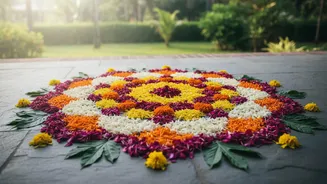
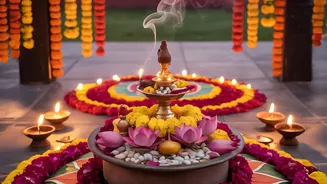
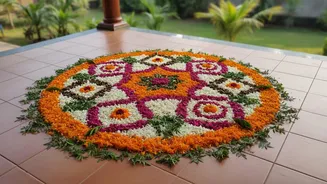
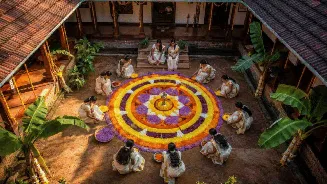
The pookkalam, or floral carpet, is more than just decoration; it's a cherished ritual that marks the ten-day Onam festival, which in 2026 begins on August 16 and culminates with Thiruvonam on August 26. This intricate art form, laid out to welcome the legendary
King Mahabali, traditionally begins with a small, simple design on the first day, Atham, and grows more elaborate each day. Historically, these designs were made using flowers and leaves foraged from the immediate surroundings, a practice that was inherently sustainable. Reviving this spirit is the key to a greener celebration.
Choose Local, Celebrate Authentic
The most significant step towards a sustainable pookkalam is to rethink your flower sourcing. While markets are flooded with commercially grown marigolds and chrysanthemums transported from neighbouring states, the true tradition lies in using local, seasonal blooms. Flowers like the humble white Thumba (Ceylon Slitwort), yellow Mukkutti, red Chethi (Ixora), and blue Shankupushpam (Butterfly Pea) are not just traditional choices but also support local biodiversity. Opting for flowers grown in your own garden or local community reduces the carbon footprint associated with transportation and supports local growers. Kerala has seen a rise in local floriculture initiatives, making it easier to find fresh, eco-friendly options.
A Palette of Conscious Colour
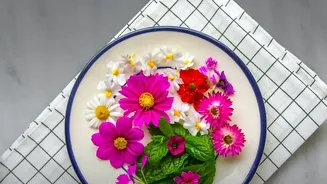
Building a vibrant pookkalam doesn’t require exotic or out-of-season flowers. Embrace the spectrum of colours offered by native plants. For reds and pinks, look to Chemparathy (Hibiscus) and Thetti (Ixora). Jamanthi (Marigolds) and Mukkutti provide brilliant yellows and oranges. The delicate white of Thumba and Jasmine (Mullappoo) offers purity and fragrance. For touches of green, don't just rely on flowers; incorporate beautiful leaves like Tulasi (Holy Basil). Using a diverse range of locally available flora not only makes your pookkalam unique but also reduces the strain on a few heavily commercialized species.
Beyond the Petal: Natural Alternatives
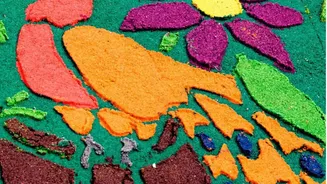
A stunning pookkalam can be created without using a mountain of flowers. Reduce your floral consumption by incorporating other natural materials. Use powdered rice or rice flour to draw the initial outline, a traditional and fully biodegradable method. Coloured rice can also be used to fill in sections of your design. For texture and volume, consider using greenery such as leaves and grasses. These elements add depth and contrast while helping to fill space, making your flower supply go further. This approach harkens back to a time when every part of nature was used resourcefully.
The Afterlife of Your Pookkalam
The celebration doesn’t end when the festival is over. A truly sustainable pookkalam is one that returns to the earth gracefully. If you've avoided plastics, synthetic dyes, and other non-biodegradable elements, your floral arrangement can be easily composted. Sweep the flowers and leaves into a compost bin or a designated spot in your garden. Within weeks, they will break down into nutrient-rich manure that can be used to nourish the very plants that might create next year's pookkalam. This completes the cycle, turning your beautiful creation into a gift that gives back to the soil.