




Why Smash Things on the Moon?
The idea of intentionally crashing hardware into the Moon isn't about creating debris; it's about excavation on a cosmic scale. A multi-ton object striking the lunar surface at thousands of kilometers per hour releases an enormous amount of energy. This
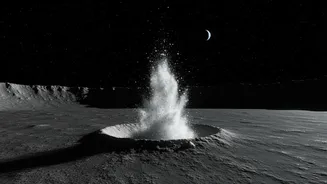
impact gouges out a new crater and, more importantly, ejects a massive plume of lunar soil, rock, and dust high above the surface. For scientists, this plume is a treasure trove. By analyzing the material thrown up from beneath the Moon's surface, we can study what lies hidden in areas we can't otherwise reach. This technique is particularly useful in the Moon's most mysterious and promising regions: the permanently shadowed craters at its poles.
The Hunt for Hidden Water Ice
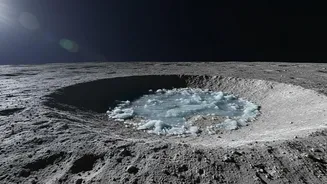
The primary target for these impact missions is water. For decades, scientists have theorized that craters at the lunar poles, which never see direct sunlight, could be cold traps containing billions of tons of water ice. This water, likely delivered by comets and asteroids over eons, would be an invaluable resource for future astronauts, providing drinking water, breathable air, and rocket fuel. A deliberate impact, like NASA's LCROSS mission in 2009, is designed to blast into one of these dark craters. As the resulting plume rises into sunlight, instruments on a trailing spacecraft or in orbit can analyze the light passing through it. Water molecules and their components absorb specific frequencies of light, creating a clear chemical signature that confirms their presence. The LCROSS mission famously used this exact method to confirm significant amounts of water ice in a south pole crater.
A Blueprint from Past Missions
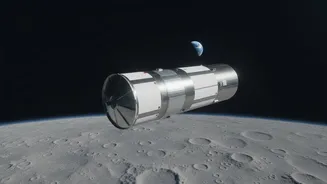
The concept has been proven multiple times. During the Apollo era, NASA intentionally crashed the massive third stages of Saturn V rockets onto the Moon. The primary goal then was to create artificial moonquakes that could be measured by seismometers left on the surface, helping to reveal the Moon's internal structure. More recently, the 2009 Lunar Crater Observation and Sensing Satellite (LCROSS) mission was a textbook example of a planned scientific impact. It sent its spent Centaur upper stage crashing into the Cabeus crater, with a shepherding spacecraft flying through the plume to analyze its contents before making its own impact moments later. Even accidental crashes, like that of a stray Falcon 9 booster stage in 2022, provide unplanned opportunities for science, allowing orbiters to study a fresh crater and the behavior of ejected material.
How to Study a Lunar Crash
Observing a lunar impact is a multi-stage, multi-location effort. The main analysis often comes from a dedicated spacecraft flying nearby, as was the case with LCROSS. Additionally, powerful orbiters like NASA's Lunar Reconnaissance Orbiter (LRO) play a crucial role. LRO can take high-resolution images of the target area before and after the event. Comparing these images allows scientists to precisely measure the size and shape of the new crater, study the patterns of the ejected material, and look for changes on the surface. This helps them understand the physical properties of the lunar soil, or regolith. Earth-based telescopes can also be used to look for the faint flash of the impact or analyze the chemical makeup of the plume as it scatters sunlight, though this is challenging.