





The Rise of the Apartment Mudroom
Traditionally, a mudroom is a luxury of large, independent houses—a transitional space to shed the dirt and grime of the outdoors. But city living, especially in the compact apartments of metropolises like Mumbai and Bengaluru, demands a different approach.
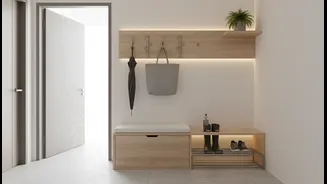
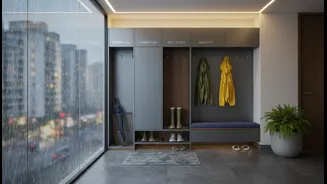
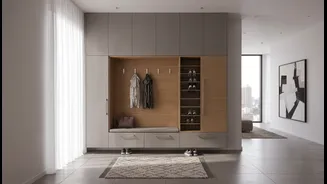
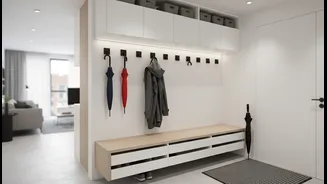
Enter the modular mudroom. This isn't a separate room, but a cleverly designed system of furniture and storage solutions specifically for entryways. It’s a concept that has been adapted for urban life, focusing on creating a functional “drop zone” right at your front door without needing extra square footage. Think of it as a hardworking corner or wall that combines a bench, shoe storage, and hooks into one streamlined unit. Modular systems allow you to pick and choose components—a slim shoe cabinet, a padded bench with storage underneath, wall-mounted hooks, and a small shelf for keys and mail—to fit your specific space and needs.
A New Focus on Hygiene
The past few years have permanently changed our relationship with our homes, placing a huge emphasis on cleanliness and hygiene. The entryway has become more than just a passage; it’s now the first line of defense, a buffer between the outside world and our private sanctuary. A modular mudroom provides a designated space to take off shoes, hang up coats, and discard items from outside before they travel further into your home, significantly reducing the spread of dust and germs. Historically, major health events have always influenced architecture—from the popularisation of powder rooms to the use of easy-to-clean tiles. The current focus on entryway hygiene is a modern continuation of this trend, making a structured landing spot an essential feature rather than a decorative one.
Taming Clutter and Chaos
For families, the morning rush and evening return can turn the main entrance into a cluttered obstacle course. Backpacks, sports equipment, umbrellas, and multiple pairs of shoes can quickly overwhelm a small space. A modular mudroom brings order to this daily chaos. By providing designated spots for every item—cubbies for each child's shoes, hooks for bags, and drawers for smaller accessories—it promotes a routine of organization. This system not only keeps the home tidier but also streamlines daily routines, making it easier to find what you need when you're heading out the door. The goal is to contain the mess before it has a chance to spill into your living areas, preserving a sense of calm and order throughout the rest of your home.
Smart, Adaptable Design for Indian Homes
The beauty of modular design lies in its flexibility, a crucial factor for modern Indian apartments where space is at a premium. These systems don't require costly or permanent renovations. Many solutions are freestanding or use vertical wall space, making them ideal for renters and homeowners alike. In the Indian context, such a space is invaluable for handling everything from dusty shoes in the summer to wet umbrellas and muddy footwear during the monsoon. Furniture companies and interior designers now offer a wide range of modular pieces made from materials like engineered wood, which are durable, lightweight, and often more affordable. These units can be customised with finishes and colours that blend seamlessly with existing decor, from traditional woodwork-inspired designs to sleek, minimalist aesthetics.