





The New Co-Pilot for Creators
For years, building any digital interface—from a simple webpage to a complex data dashboard—was a manual, labor-intensive process. Developers and designers would spend countless hours writing code, arranging pixels, and testing layouts. Today, that is
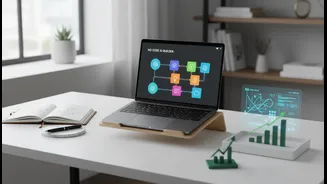
changing at a breathtaking pace. Technologies like ChatGPT are becoming active partners in the creation process. Instead of just responding to questions, these AI systems can now understand and execute complex instructions. A designer can now describe an interface in plain language—"Create a dashboard for tracking quarterly sales with a bar chart for regional performance and a line graph for monthly trends"—and the AI can generate the underlying code and a visual first draft in moments. This shift from manual execution to AI-assisted orchestration allows creators to focus less on the 'how' and more on the 'what' and 'why' of their design.
Smarter Dashboards, Instantly
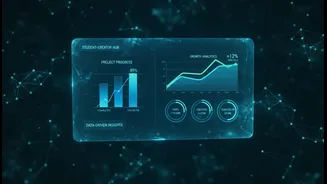
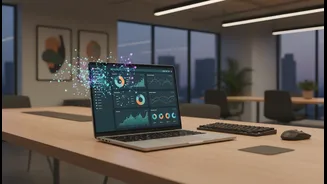
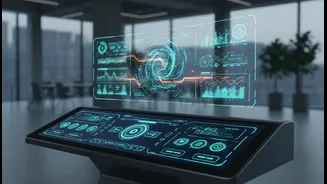
Business intelligence (BI) dashboards are the nerve centers of modern companies, providing a visual snapshot of key performance indicators. However, creating and interpreting them has often required specialized skills. AI is democratizing this process. Tools are now available that integrate generative AI directly into analytics platforms like Power BI. This allows a business leader to ask questions in natural language, such as, "Why did our revenue in the northeast decline last month?" The AI can then analyze the data, identify trends, and generate a textual summary or new visualization to answer the question directly on the dashboard. This transforms the dashboard from a static report into a conversational, interactive analytics partner. AI can automate the tedious tasks of data cleaning and preparation and even suggest the most effective ways to visualize complex data sets.
Reimagining the Portal Experience
Customer portals and internal company websites are essential for communication and service delivery. Historically, they have often been static and difficult to navigate. Generative AI is making these portals more dynamic and personalized. By analyzing user data, AI can tailor the content and layout for each individual, ensuring the most relevant information is always front and center. For example, an e-commerce customer portal could proactively show a user their recent order status, suggest relevant support articles based on their purchase history, and provide a conversational chatbot for instant help. On an employee intranet, AI can help staff find company information or complete HR tasks through a simple chat interface, rather than navigating complex menus. This makes portals less like a digital filing cabinet and more like a helpful, personalized concierge.
Prototyping at the Speed of Thought
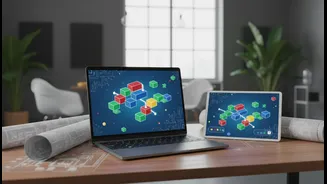
Perhaps the most dramatic impact of generative AI is in the world of prototyping. In the past, turning an idea into a clickable, testable prototype could take weeks. Now, it can be done in hours or even minutes. Designers and product managers can simply sketch an idea on a napkin, take a photo, and have an AI tool convert it into a functional user interface. Tools like Uizard and v0 allow creators to generate high-fidelity prototypes just by describing the app they envision. This rapid iteration cycle is a game-changer, as it allows teams to test more ideas, gather user feedback earlier, and identify flawed concepts before a single line of production code is written. This drastically reduces development costs and accelerates the pace of innovation, allowing teams to go from a rough idea to a shareable demo faster than ever before.
Human Oversight Remains Crucial
Despite its incredible power, AI is not a replacement for human designers and developers. Experts note that while AI is excellent at executing instructions and automating repetitive tasks, it still lacks the creativity, strategic thinking, and empathy of an experienced professional. AI models can sometimes generate generic or flawed designs, and they don't understand the deeper business goals or user emotions behind a project. The future of design is not about humans versus AI, but humans working with AI. The most successful professionals will be those who master these tools, using them as a 'supercharged intern' to handle the grunt work, which frees them up to focus on the high-level strategy, complex problem-solving, and creative vision that only a human can provide.