

The Ancient Seeds of a Global Movement
The story of yoga begins long before the advent of yoga pants and stylish studios. Its earliest roots can be-traced back over 5,000 years to ancient India. The very first mentions are found in sacred texts like the Rig Veda, one of Hinduism's oldest scriptures.
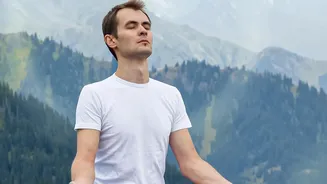
Here, the word 'yoga' (from the Sanskrit root 'yuj', meaning to unite or yoke) wasn't about physical postures, but about yoking the mind and spirit for a higher consciousness. Early practitioners were ascetics and hermits who used meditation, breath control, and ritual gestures to connect with the divine. These pre-classical forms laid the philosophical groundwork, viewing yoga as a profound tool for spiritual insight and self-realisation, a far cry from a simple exercise routine.
Patanjali's Blueprint for the Mind
A pivotal moment in yoga's history came around 400 CE with the sage Patanjali's Yoga Sutras. This collection of 196 concise verses, or aphorisms, systematically codified yoga into a clear philosophical system. Patanjali defined yoga as 'the cessation of the modifications of the mind', framing it as a path to mental clarity and inner peace. He outlined the famous 'Eight Limbs of Yoga' (Ashtanga Yoga), a comprehensive guide to living a purposeful life. Interestingly, physical postures, or 'asana', constitute only one of these limbs and were primarily intended to prepare the body for long periods of comfortable, steady meditation. The other seven limbs include ethical principles (Yamas and Niyamas), breath control (Pranayama), sense withdrawal (Pratyahara), concentration (Dharana), meditation (Dhyana), and finally, enlightenment (Samadhi). Patanjali's work solidified yoga's status as a profound psychological and spiritual discipline.
The Rise of Physical Practice
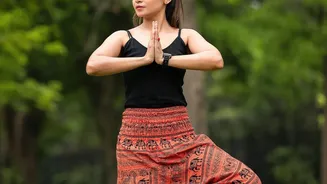
The yoga most people recognise today, with its emphasis on physical postures, gained prominence much later with the development of Hatha Yoga in the medieval period. Texts like the Hatha Yoga Pradipika began to detail various asanas and breathing techniques designed to energise and purify the body. Even then, the goal was not just physical fitness but to prepare the body as a vessel for higher states of consciousness. This focus on the physical body, however, laid the essential groundwork for the modern interpretation of yoga. It was this more accessible, body-centric approach that would eventually capture the world's imagination, shifting the focus from a purely internal, meditative practice to one that could be seen, taught, and physically experienced.
From India to the World Stage
Yoga's journey to the West began in earnest in the late 19th century. Swami Vivekananda is widely credited with introducing the philosophical concepts of yoga and Vedanta to a Western audience at the 1893 Parliament of Religions in Chicago. He spoke of yoga as a universal path to spiritual realisation, captivating listeners and opening the door for future teachers. In the 20th century, a new wave of gurus brought the physical practice to the forefront. Pioneers like B.K.S. Iyengar, often called the 'father of modern yoga', were instrumental. Having used yoga to overcome his own childhood illnesses, Iyengar developed a method that emphasised precise physical alignment and the revolutionary use of props like blocks and straps to make asanas accessible to everyone, regardless of age or ability. His work, particularly the book 'Light on Yoga', helped demystify the practice for a global audience and professionalised its teaching.
The Birth of a Global Lifestyle
Once it took root in the West, yoga was transformed. It was adapted, secularised, and packaged for a consumer audience, morphing from a spiritual discipline into a key pillar of the burgeoning wellness movement. The focus shifted heavily towards the physical benefits—flexibility, strength, and stress relief—which made it highly appealing in modern, fast-paced societies. This led to the creation of the multi-billion dollar yoga industry, complete with designer yoga wear, international retreats, and countless branded styles of classes. While this commercialisation has made yoga more accessible to millions, it has also sparked debate about cultural appropriation and the dilution of its deep philosophical roots. The practice that was once about dissolving the ego became, in some contexts, a lifestyle brand.