



The Problem with Diesel in Paradise
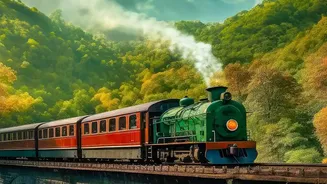
For decades, the charming mountain railways of India, including the UNESCO World Heritage sites like the Kalka-Shimla and Darjeeling Himalayan Railway, have relied on diesel locomotives. While iconic, these engines are a source of significant pollution.
They release harmful emissions like nitrogen oxides, particulate matter, and sulphur, which not only degrade the air quality in these fragile ecosystems but also contribute to noise pollution. Studies have shown that diesel exhaust can have a measurable negative impact on the environment and human health, a serious concern in these pristine tourist destinations. Furthermore, electrifying these challenging routes with overhead cables is often impractical and would spoil the very scenic beauty that makes them famous. This created a difficult choice: how to modernise and decarbonise without destroying the character of these historic lines?
A Vision: 'Hydrogen for Heritage'
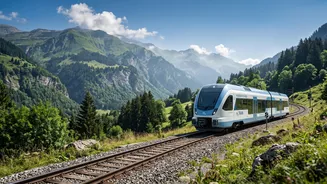
Indian Railways’ answer is the ambitious ‘Hydrogen for Heritage’ initiative. The plan involves rolling out a fleet of 35 advanced, zero-emission trains specifically for these treasured routes. The project aims to retrofit the existing coaches, preserving their vintage aesthetics while replacing the polluting diesel engines with a clean, modern power source. This strategy allows India to showcase its commitment to both its rich history and a sustainable future. By targeting heritage lines first, Indian Railways is making a powerful statement: innovation can serve preservation. The goal is to eliminate carbon emissions entirely on these routes, safeguarding the mountain air and enhancing the eco-friendly appeal for tourists from around the world.
The First Step: A Successful Pilot
Before these trains could tackle the steep gradients of the Himalayas, the technology had to be proven. That milestone was achieved on July 17, 2026, when India's first indigenous hydrogen-powered train was successfully launched. This pilot project operates on an 89-kilometre stretch between Jind and Sonipat in Haryana. While not a mountain route, this operational train serves as a crucial technology demonstrator. It allows engineers to test the system's reliability and performance under real-world conditions, gathering valuable data that will inform the deployment on the more demanding heritage circuits. This first train, designed and built entirely in India, represents a significant achievement for the nation's 'Atmanirbhar Bharat' mission.
How Does a Hydrogen Train Work?
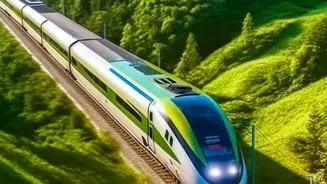
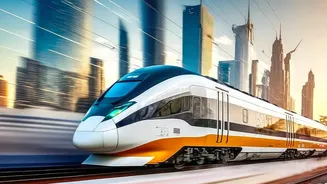
So, what makes these trains so clean? Unlike a diesel locomotive that burns fuel, a hydrogen train is essentially an electric train that carries its own power plant. The process is remarkably clean and efficient. Hydrogen is stored in high-pressure tanks on the train. It is then fed into a Proton Exchange Membrane (PEM) fuel cell. Inside the fuel cell, the hydrogen reacts with oxygen drawn from the air. This electrochemical reaction generates electricity to power the train's motors, with the only by-products being heat and pure water vapour. There is no smoke, no soot, and no carbon emissions from the train itself, making it a true zero-emission solution for public transport.
The Road Ahead for India's Green Trains
The successful launch of the Jind-Sonipat service has paved the way for the next phase. Indian Railways is already leveraging the experience to move forward with the ‘Hydrogen for Heritage’ vision. Sites for the necessary hydrogen refuelling infrastructure have been identified along the Kalka-Shimla corridor, signalling that the transition is actively being planned. While a definitive timeline for the mountain rollout has not been announced, the pilot project has proven the viability of the technology. With this achievement, India joins a select group of nations, including Germany and Japan, at the forefront of hydrogen rail technology. The initiative is a key part of Indian Railways' larger goal to become a 'Net-Zero Carbon Emitter' by 2030, blending heritage preservation with cutting-edge green innovation.