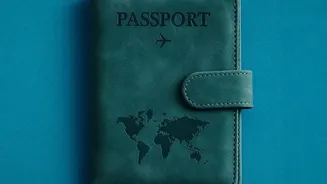







Passport and Application Form
The foundation of your application is a valid passport and the correctly filled application form. Your passport must be valid for at least three months beyond your intended departure date from the Schengen area, have been issued within the last ten years,
and contain at least two blank pages. When filling out the application form, ensure every detail is accurate and matches the information in your supporting documents. Inconsistencies are a common reason for refusal. You will also need two recent passport-sized photographs that meet the specific 35x45 mm dimension and white background requirements.
Proof of Financial Means
This is often the most scrutinized part of an application for Indian professionals. You must prove you can finance your trip. This isn't just about showing a large closing balance. Consulates want to see a consistent and healthy financial history. Provide original, bank-stamped statements for the last three to six months. A sudden large deposit just before applying can be a red flag, as it may suggest borrowed funds. To supplement your bank statements, include your last three months' salary slips and Income Tax Returns (ITR) for the past two to three years. For a short trip, a consistent balance of around ₹2.5 to ₹4 lakh is a good benchmark, but this varies by country.
Employment Verification and Leave Approval
As a professional, proving your strong ties to India is crucial, as it assures the visa officer of your intention to return. The most important document here is a No Objection Certificate (NOC) from your employer. This letter, printed on company letterhead, should state your position, salary, date of joining, and clearly mention that your leave for the specified travel dates has been approved. It should also confirm you are expected to resume your duties upon your return. This simple letter significantly strengthens your application by showing you have a stable job to come back to.
A Coherent Travel Plan
Your documents must tell a consistent story about your trip. This includes a day-by-day travel itinerary, confirmed round-trip flight reservations, and proof of accommodation for every night of your stay. An unclear or vague purpose of travel is a major reason for visa refusal. For example, if your itinerary says you're spending seven days in Germany and two in France, you must apply at the German consulate. Applying to the wrong embassy can lead to rejection. Ensure the dates on your flight bookings, hotel reservations, and leave letter all align perfectly.
Mandatory Travel Insurance
Schengen visa rules are very strict about travel insurance. It is a mandatory requirement, and any policy that doesn't meet the specific criteria will result in refusal. Your insurance must provide a minimum coverage of €30,000 for medical emergencies and repatriation. The policy must be valid in all 29 Schengen countries for the entire duration of your trip. When purchasing a policy from an Indian provider, ensure it is on the list of insurers approved by the Schengen consulates.
The Final Checklist
Before heading to your appointment at a centre like VFS Global, do a final review. Arrange your documents in a logical order: application form, passport copies, photos, cover letter, travel itinerary, flight and hotel bookings, insurance policy, and all financial and employment proofs. Your cover letter is your chance to briefly explain the purpose of your trip and summarise your application. Also, include copies of any previous visas, especially for the Schengen area, UK, or USA, as this demonstrates a history of compliant travel. Double-checking these small details can be the difference between a smooth approval and a disappointing rejection.