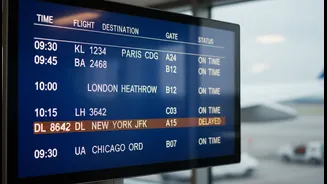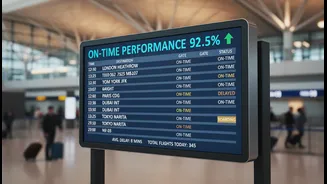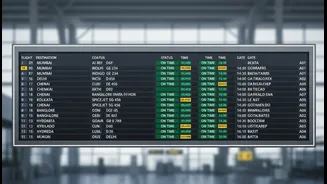









A Shift Beyond Price Tags
For years, the primary battleground for airlines was price. Travellers diligently compared fares, often willing to overlook inconvenient timings for a better deal. Today, that calculation is changing. While cost remains a significant factor, a new priority
has emerged: reliability. A string of highly publicised travel disruptions and the sheer volume of people taking to the skies have made passengers less tolerant of delays. This shift is especially pronounced among business travellers who operate on tight schedules and leisure flyers who want to maximise every moment of their precious vacation time. The modern traveller expects dependability, and an airline's commitment to on-time performance (OTP) is the most tangible proof of that commitment.
The Real Cost of a Delay
A delayed flight is more than just a few hours wasted at an airport. For many, it has significant knock-on effects that carry both financial and emotional costs. A missed connection can mean forfeiting a non-refundable hotel booking, missing the first day of a cruise, or being late for a critical business meeting. These disruptions cause stress and can ruin a well-planned itinerary. Recent surveys show a high level of concern among Indian travellers regarding delays and cancellations, with 80% citing it as a worry. This growing awareness is pushing passengers to look beyond the ticket price and evaluate the potential hidden costs of an unreliable airline.
Data Puts Power in Passenger Hands
This new focus on punctuality is powered by data. Travellers are no longer in the dark about airline reliability. In India, the Directorate General of Civil Aviation (DGCA) publishes monthly reports on the on-time performance of domestic carriers, defining a flight as delayed if it departs more than 15 minutes past its schedule. This official data is easily accessible and allows passengers to see exactly how different airlines stack up. Websites and apps like FlightAware, ixigo, and Adani OneApp also provide real-time flight tracking, giving passengers live updates on departures, arrivals, and delays. This transparency empowers travellers to make informed decisions before they even book a ticket.
Who Leads the Punctuality Race in India?
According to recent DGCA reports and aviation analytics, a clear hierarchy has emerged in the Indian market. IndiGo consistently leads the pack with an on-time performance often hovering between 80-85%. The new entrant, Akasa Air, has also established itself as a reliable choice, frequently posting OTP figures in the high 70s or low 80s. Air India, as part of its ongoing transformation, has shown significant improvement, recently ranking fourth globally for on-time arrivals in a June 2026 report by analytics firm Cirium. On the other end of the spectrum, some carriers have struggled, with reports in mid-2026 noting significant operational challenges and higher delay rates for airlines like SpiceJet. These figures demonstrate that an airline's operational strategy directly impacts the passenger experience.
How to Book Smarter
For travellers who want to prioritise punctuality, a few simple steps can make a big difference. Before booking, take a moment to check the latest DGCA on-time performance reports. This data, often summarised by news and travel sites, provides a clear, unbiased look at an airline's recent track record. When choosing flights, consider that early morning departures are generally less prone to the cascading or 'knock-on' delays that build up throughout the day. Finally, weigh the cost against reliability. A slightly more expensive ticket on an airline with a stellar OTP record could save you from the far greater expense and stress of a significant delay. In today's travel climate, paying a small premium for peace of mind is a trade-off many are willing to make.