






Understanding Your 'Astrological' Chart
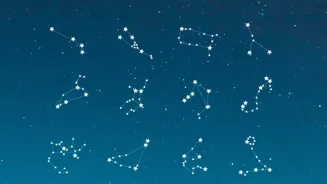
First, let's clarify the chart. While the headline says 'astrological', what you'll need for finding constellations is an astronomical chart, often called a star chart or planisphere. These are maps of the night sky. The good news is you don't need a paper
map anymore. Modern stargazing apps for your phone, like Star Walk 2 or SkyView, use your location and the direction you're pointing your phone to show you exactly what's in the sky above you in real-time. They are the ultimate hack for beginners, taking all the guesswork out of identifying stars and constellations. These apps essentially turn your phone into a dynamic window to the cosmos.
Your Urban Stargazing Toolkit
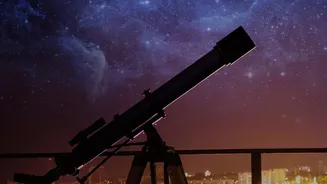
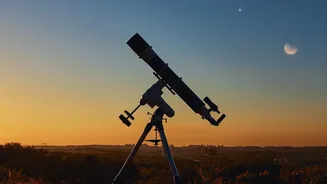
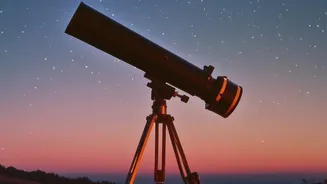
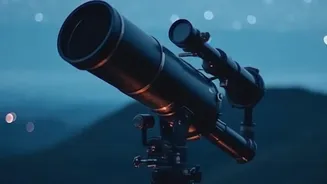
You don't need a massive telescope to start. In fact, your most important tool is patience. Your eyes need about 20 to 30 minutes to fully adapt to the dark, a process called 'dark adaptation'. Looking at your bright phone screen can ruin this, so set your stargazing app to 'night mode', which uses a red filter to preserve your night vision. A simple pair of binoculars can dramatically enhance your view, revealing star clusters and details you can't see with the naked eye. Finally, choose your location wisely. A rooftop, a high balcony, or a quiet corner of a park away from direct streetlights can make a huge difference. The higher up you are, the less atmospheric haze you have to look through.
Top Constellations to Find in November
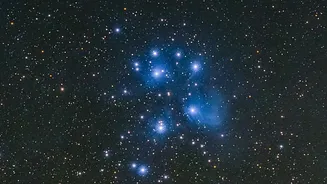
November is a fantastic month for stargazing in India, as the post-monsoon air is often exceptionally clear. Look for these prominent constellations in the evening sky: Cassiopeia, the Queen: This is one of the easiest to spot. Look to the north for a distinct 'W' or 'M' shape made of five bright stars. Cassiopeia is visible all night long from northern latitudes and serves as a great signpost in the sky. Pegasus, the Winged Horse: Look high overhead for the 'Great Square of Pegasus', a large, easily recognisable square of four similarly bright stars. This asterism forms the body of the mythological horse and is a dominant feature of the autumn sky. Andromeda, the Chained Princess: Branching off from one corner of the Great Square of Pegasus is the constellation Andromeda. On a very clear, dark night away from the worst city lights, you might spot a faint, fuzzy smudge here. That's M31, the Andromeda Galaxy—the most distant object visible to the naked eye, over 2.5 million light-years away. Binoculars will make it much easier to see. Taurus, the Bull: Rising in the east later in the evening is Taurus. Look for the bright, reddish star Aldebaran, which marks the bull's eye. Nearby, you'll see a tiny, dipper-shaped cluster of stars known as the Pleiades, or the 'Seven Sisters'. While you might only see six stars with the naked eye, binoculars reveal dozens in this beautiful open star cluster.
Simple Hacks to Beat the Glow
Fighting light pollution is the main challenge for urban stargazers. The key is to maximise what you can see. First, focus on objects that are higher in the sky, near the zenith (the point directly overhead). The sky is darkest here because you are looking through the least amount of Earth's atmosphere and hazy city air. Second, use buildings or trees to block the direct glare of streetlights or security lights. This simple act of shielding your eyes from nearby light sources can significantly improve what you can see. Finally, plan your sessions. The best time to observe is often later in the evening, after midnight, when some commercial and residential lights may be turned off. It’s also wise to check the phase of the Moon; a bright full moon can wash out the sky just as much as city lights.