




What Exactly Is a VR/AI Classroom?
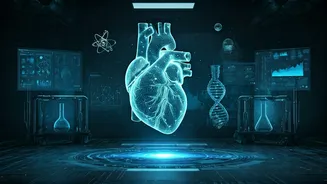
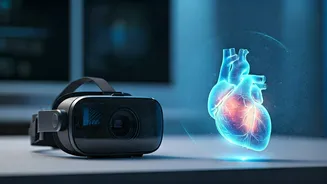
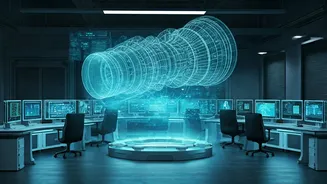
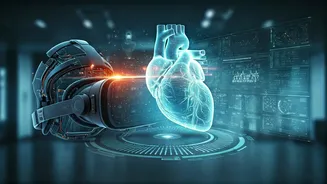
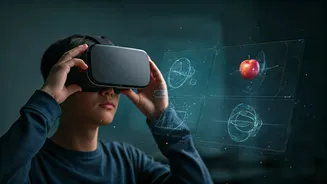
Think of it as a powerful partnership. Virtual Reality (VR) provides the 'where,' and Artificial Intelligence (AI) provides the 'who.' The VR component uses a headset to immerse a student in a fully realised 3D environment—be it a physics lab, a historical
site, or the inside of a human heart. It’s a space where you can look around, move, and interact with objects just as you would in the real world. But immersion alone isn't enough for effective learning. That’s where AI comes in. The AI acts as an intelligent, ever-present tutor. It can guide the student through an experiment, ask questions to test their understanding, provide instant feedback on mistakes, and adapt the difficulty of the task based on the student's performance. It’s the difference between watching a video of a science experiment and having a personal guide help you perform it yourself.
Solving India’s Educational Gaps
For a country like India, with its vast and diverse student population, this technology addresses several persistent challenges. Many schools and colleges, particularly in remote or underserved areas, lack the funding for high-end, well-equipped laboratories. Expensive equipment, consumable chemicals, and cadavers for medical training are often in short supply. VR labs democratise access. A single software program can replicate a multi-crore facility, accessible to any student with a headset. Safety is another major advantage. Students can learn to handle dangerous machinery, mix reactive substances, or perform delicate procedures without any physical risk. Mistakes become learning opportunities, not accidents. This is particularly crucial for fields like engineering, medicine, and vocational training, where hands-on skill is paramount but practice can be hazardous or costly.
The Power of Limitless Practice
The headline's promise of 'limitless' practice isn't just hyperbole; it points to the core pedagogical benefit. In a traditional lab, a student might get to perform an experiment only once due to time and resource constraints. In a VR lab, they can repeat it a hundred times until they achieve mastery. The AI can introduce new variables each time, testing the student's ability to adapt. For a future surgeon, this means practising a suturing technique until it becomes muscle memory. For an engineering student, it means assembling and disassembling a virtual engine to understand every component. The AI-driven feedback loop is key. If a student makes a mistake, the system doesn't just say 'wrong.' It can explain *why* it was wrong, replay the step, and offer a hint for the correct procedure. This creates a deeply personalised learning path for every student, allowing them to progress at their own pace.
More Than Just Science Labs
While science and medicine are the most obvious applications, the potential is much broader. Imagine history students walking through the ancient city of Mohenjo-Daro, guided by an AI historian who explains the architecture and social structure. Or architecture students testing the structural integrity of their virtual building designs against simulated earthquakes. Even soft skills can be taught. Companies are already using VR simulations with AI-powered characters to train employees in public speaking, customer service negotiations, and leadership scenarios. The AI can analyse the user's tone of voice, body language (tracked by the headset), and word choice to provide feedback on their communication skills. This expands the definition of 'lab practice' to include almost any skill that can be simulated.
The Hurdles on the Horizon
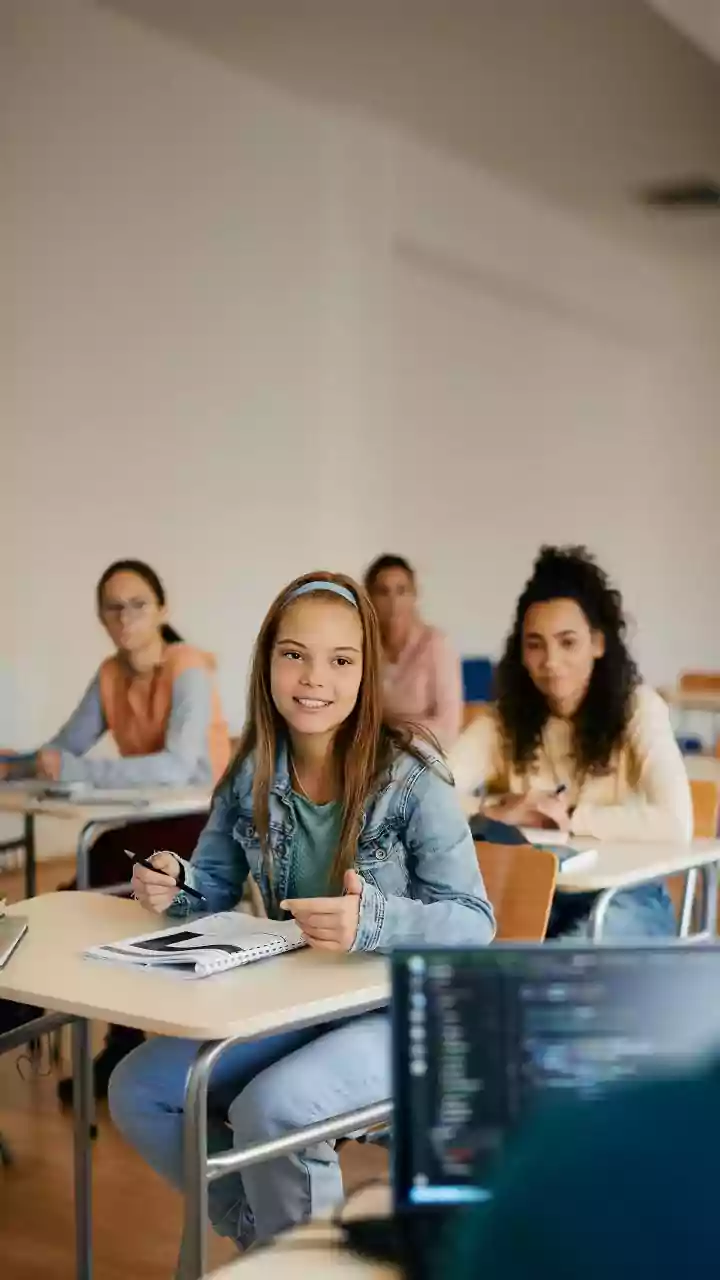
Despite the immense potential, widespread adoption faces significant challenges. The most immediate is cost and infrastructure. While cheaper than building a physical lab, high-quality VR headsets and the powerful computers needed to run them are still expensive for many institutions. Furthermore, the digital divide means that students without reliable internet access would be left behind. There's also the human element. Teachers need to be trained not just to use the technology, but to integrate it effectively into their curriculum. A VR lab shouldn't replace teachers, but rather empower them. Finally, there's the risk of creating an isolated learning experience. A balance must be struck between the focused, individual practice of VR and the collaborative, social learning that happens in a real-world classroom.