







An Encounter with Real Kulfi
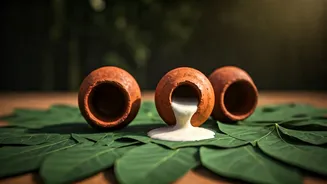
The first encounter is always a surprise. You expect the dense creaminess of modern kulfi, but what you get is something else entirely. The vendor, a master of his craft, deftly pulls a large, cylindrical mould from a salt-and-ice-packed matka. With a swift
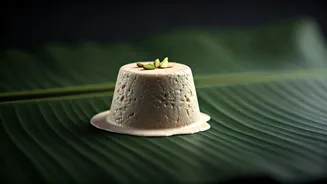
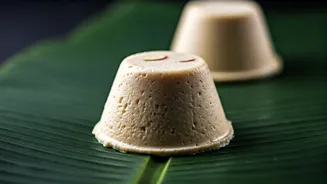
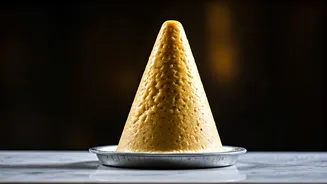
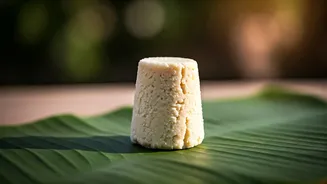
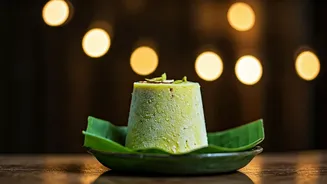
movement, he slides out the frozen block and slices a disc onto a ‘dauna’—a small bowl made of dried leaves. It’s not smooth. It’s slightly coarse, with tiny, delightful ice crystals that crunch ever so slightly before melting on your tongue. This is patti wali kulfi, or leaf kulfi, and it’s a taste of Amritsar’s soul. The flavour is pure and intense: a rich, caramelised milkiness from hours of slow simmering, studded with cardamom and pistachios. It’s a dessert that demands your full attention.
The Art of Slow Cooking
What sets Amritsari kulfi apart from its countless cousins across the country is its unapologetically rustic texture. This isn’t a flaw; it’s a feature, a hallmark of its traditional preparation. The secret lies in the milk. Full-fat milk is slow-cooked in a large kadai for hours, patiently stirred until it reduces by more than half, thickening into a fragrant, grainy mixture known as rabri. Sugar and flavourings are added, but crucially, no cornflour, stabilisers, or emulsifiers are used to create an artificially smooth texture. The mixture is then poured into moulds and slow-frozen in a bed of ice and salt. This process prevents the formation of large, unpleasant ice shards, instead creating a signature texture that is chewy, icy, and milky all at once. It’s a labour of love that modern methods simply cannot replicate.
Served on a Slice of Tradition
The experience is incomplete without its unique serving vessel. Long before plastic and paper cups became the norm, street food in India was served on plates and bowls made from leaves. The ‘dauna’ or ‘pattal’ used for Amritsari kulfi is a nod to this eco-conscious past. Usually made from sal or banyan leaves pressed and stitched together, the dauna isn’t just a disposable plate; it’s part of the flavour profile. It imparts a subtle, earthy, almost woody fragrance to the kulfi, grounding its sweetness and connecting it to the natural world. Holding the cool, slightly damp leaf bowl in your hands while the city buzzes around you is an integral part of the ritual. It’s a sensory detail that elevates a simple dessert into a cultural experience, a fleeting connection to a more sustainable time.
A Street-Side Spectacle
Finding this kulfi is an adventure in itself. You won’t see it in fancy dessert parlours. You’ll find it with street vendors, often on a hand-pushed cart, who have been perfecting their craft for generations. The true artisans offer it in its purest form, but it’s often served with a flourish of toppings that add another layer of complexity. A common and beloved addition is falooda—translucent vermicelli noodles that provide a soft, slippery contrast to the kulfi’s granular texture. A drizzle of rose syrup adds a floral sweetness, its bright pink colour a beautiful contrast against the pale cream of the kulfi. Watching the vendor assemble your plate is a piece of street theatre, a simple, practiced performance that has been repeated thousands of times.
More Than a Dessert, It’s a Memory
Why does this simple, unrefined dessert evoke such powerful feelings of nostalgia? Because it tastes of a time when things were made slowly and with intention. For many, it’s the taste of childhood summer evenings, of a special treat after a visit to the Golden Temple, of a shared moment with family on a crowded street. In a world of instant gratification and homogenised flavours, the Amritsari leaf kulfi stands as a delicious rebellion. It’s a testament to the idea that perfection isn’t about smoothness or uniformity, but about character, history, and the beautiful imperfections that come from true craftsmanship.