



It’s a bold, world-changing claim: the CEO of AI giant Anthropic, Dario Amodei, predicts that diseases like cancer could become 'relics of the past' in less than a decade. Is this the ultimate tech optimism, or a glimpse into a near future?
The Audacious Prediction
Dario Amodei,
leader of the company behind the AI model Claude, has repeatedly expressed his belief that artificial intelligence could compress 50 to 100 years of medical progress into the next five to ten. This isn't just a stray comment; it's a core part of his vision for a future where AI helps solve humanity's biggest problems. The statement, made in the context of his company's push into biological research, suggests that AI's ability to process vast amounts of complex data will revolutionize how we discover and develop new medicines. Amodei is not alone; other tech leaders, like Google DeepMind's Demis Hassabis, share this optimism, pointing to AI's power to accelerate biological research at an unprecedented speed.
The Engine of Hope: AI in the Lab
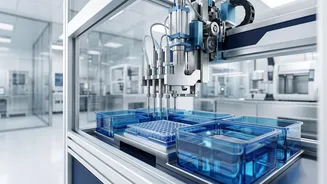
The foundation for this hope lies in AI's already proven ability to supercharge the earliest stages of medical research. Traditionally, drug discovery is a slow, expensive process of trial and error. AI models, however, can analyze massive biological datasets to identify potential drug targets, predict the 3D structure of proteins, and even design entirely new drug candidates from scratch in a fraction of the time. For example, Google's AlphaFold has already predicted the structures of over 200 million proteins, a task that would have taken centuries of lab work. Anthropic has detailed its own partnerships with biotech firms to speed up the development of treatments for cancer and other diseases, showcasing how AI can refine drug candidates and improve their effectiveness in preclinical stages.
Smarter Diagnosis and Personalized Care
Beyond creating new drugs, AI is poised to transform how cancer is detected and treated. AI-powered tools are already being used to analyze medical images like mammograms and CT scans with a level of precision that can sometimes exceed the human eye, catching cancers earlier and more accurately. In a major Swedish trial, AI-assisted mammography screening caught significantly more cancers than the standard method without increasing false alarms. Furthermore, AI can analyze a patient's unique genetic information and tumor characteristics to help doctors create personalized treatment plans, predicting which therapies are most likely to work and minimizing harmful side effects. This ability to match the right drug to the right patient at the right time is a cornerstone of modern oncology.
The Mountain of Challenges
Despite the immense potential, the road from an AI-designed drug candidate to a widely available cure is long and filled with obstacles. The biggest hurdle is the human body itself. Biology is profoundly complex, and a drug that works perfectly in a computer simulation or a lab dish may fail in human clinical trials. These trials are a necessary, expensive, and time-consuming part of the process that AI cannot simply bypass. Regulatory approval from bodies like the FDA is another critical step that takes years. Critics and pharmaceutical industry leaders, while excited about AI, caution that the timelines suggested by tech executives are highly ambitious, pointing to the stubborn realities of clinical validation, algorithmic bias, and ensuring patient safety.
A More Realistic Revolution
While a complete 'cure' for a complex and varied disease like cancer within ten years remains a moonshot, the impact of AI on cancer care in that timeframe is undeniable. The technology is already approved for use in radiology and pathology, assisting doctors in making better, faster decisions. AI is helping researchers find new ways to attack cancer cells, manage treatment side effects, and even predict a patient's risk of recurrence. The consensus among many oncologists and researchers is that AI will become an indispensable assistant, an incredibly powerful tool that enhances human expertise rather than replacing it. So, while the headline-grabbing prediction of making cancer a 'relic of the past' is debatable, a revolution in how we fight it is already well underway.