






A Policy Shift Opens the Stars
For decades, India's space ambitions were synonymous with the Indian Space Research Organisation (ISRO). But a landmark decision in 2020, crystallized in the Indian Space Policy 2023, fundamentally altered this landscape. The government opened the sector
to private enterprise, aiming to transform India from a government-led space power into a globally competitive commercial space hub. The policy allows Non-Governmental Entities (NGEs) to undertake end-to-end space activities, from building rockets and satellites to operating ground stations and providing services. This shift allows ISRO to transition away from routine manufacturing and focus on advanced research and development, deep space exploration, and national security missions. Today, India's space economy is valued at around $9 billion and is projected to grow to over $40 billion by 2030.
The Government's Guiding Hand
To manage this new ecosystem, the government established the Indian National Space Promotion and Authorisation Centre (IN-SPACe). Acting as a single-window agency, IN-SPACe promotes, authorises, and supervises private space activities, ensuring they operate safely and in compliance with international laws. Crucially, it facilitates access for private companies to ISRO's world-class infrastructure, including testing facilities and launchpads, which significantly lowers the barrier to entry. By streamlining regulations and providing a clear interface between startups and the established space apparatus, IN-SPACe is a key enabler of the commercial boom, with over 400 private space startups now registered in India.
The Rocket Builders: Skyroot and Agnikul
Leading the charge in the launch vehicle segment are two prominent startups: Skyroot Aerospace and Agnikul Cosmos. Hyderabad-based Skyroot Aerospace made history in November 2022 with the launch of Vikram-S, India's first privately built rocket. This suborbital flight was a crucial proof of concept. In July 2026, the company achieved an even greater milestone with the successful orbital launch of its Vikram-1 rocket, making India the third country, after the US and China, with a private company capable of orbital launches. Meanwhile, Chennai-based Agnikul Cosmos is pioneering advanced manufacturing techniques. The company developed the world's first single-piece 3D-printed rocket engine, the Agnilet. This innovation dramatically reduces complexity and production time. Agnikul also built India's first private launchpad at Sriharikota and successfully tested its semi-cryogenic engine in a 2024 sub-orbital launch.
Eyes in the Sky: Pixxel and Dhruva Space
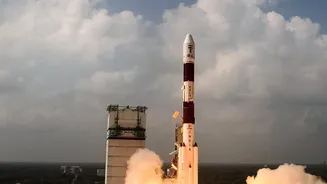
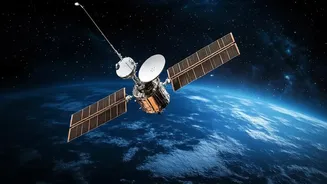
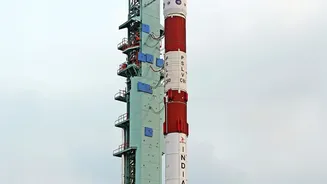
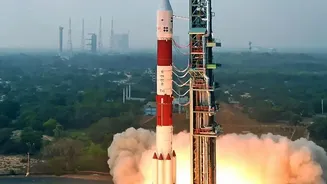
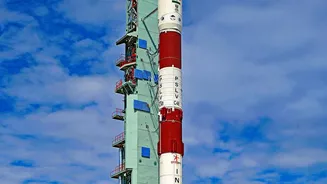
Beyond launch vehicles, Indian startups are making significant strides in satellite technology. Pixxel is building a constellation of hyperspectral imaging satellites. Unlike conventional cameras, these satellites capture data across hundreds of spectral bands, providing incredibly detailed insights for sectors like agriculture, mining, and environmental monitoring. With six 'Firefly' satellites already in orbit, Pixxel's technology can detect things like crop diseases, gas leaks, and water pollution before they become visible to the naked eye. Another key player is Dhruva Space, which specializes in small satellite platforms and orbital deployers. These deployers are critical components that ensure satellites are released safely from the launch vehicle into their correct orbit. Dhruva has successfully qualified its deployers on ISRO's workhorse PSLV rocket, becoming a vital part of the supply chain for both domestic and international satellite missions.
The Path to a Commercial Future
The rapid emergence of these companies signals a profound transformation. Startups are no longer just component suppliers for ISRO; they are now designing, building, and operating their own complex space systems. This has created a vibrant ecosystem that is attracting significant investment and global attention. The goal is to capture a larger share of the global space economy, which is currently dominated by a few major players. By offering cost-effective and reliable launch services and cutting-edge satellite data, these private firms are positioning India as an attractive hub for global space commerce. The journey is just beginning, but the combined force of private ingenuity and strategic government support has firmly placed India's commercial space sector on an upward trajectory.