





Why Sitting Stiffens Your Joints
Our bodies are designed for movement. When you sit for extended periods, several things happen that contribute to stiffness. First, the circulation of synovial fluid, the natural lubricant in your joints, decreases. Movement acts like a pump, distributing
this fluid to keep cartilage healthy and friction-free. Without it, joints feel 'rusty' and stiff. Secondly, prolonged sitting keeps certain muscles in a shortened position, particularly the hip flexors at the front of your hips. Over time, these muscles become tight, limiting your range of motion and forcing other muscles, like those in your lower back, to compensate, which can lead to pain. Finally, inactivity weakens the muscles that support and stabilize your joints, putting more stress on the joints themselves and increasing the risk of injury.
The Primary Impact Zones
While sitting affects the whole body, three areas are particularly vulnerable to stiffness and pain. The hips often take the biggest hit due to the constant shortening of the hip flexor muscles, which can lead to tightness and reduced mobility. The spine, especially the lower back and neck, also suffers. Slouching or poor posture increases pressure on the spinal discs and strains the surrounding muscles. Lastly, the knees can become stiff. Lack of movement reduces lubrication, and muscle weakness around the joint can lead to instability and increased pressure on the knee joint itself.
Simple Stretches for Your Workday
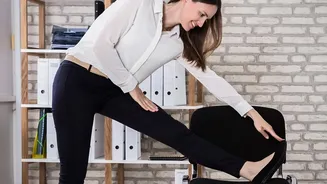
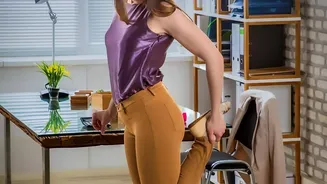
You don't need a full gym session to combat stiffness. Integrating small 'movement snacks' into your day can make a huge difference. Try these simple stretches right at your desk: Neck Tilts: Gently tilt your ear toward your shoulder, holding for 20-30 seconds on each side to relieve neck tension. Shoulder Rolls: Inhale and lift your shoulders up toward your ears, then exhale and roll them back and down. Repeat 10 times to release upper back stiffness. Seated Figure-Four Stretch: Cross one ankle over the opposite knee. Gently press on the lifted knee until you feel a stretch in your hip and glute. Hold for 20-30 seconds and switch sides. Seated Spinal Twist: Sit tall and gently twist your torso to one side, using the armrest for a deeper stretch. This helps mobilize your spine.
Rethink Your Workspace Ergonomics
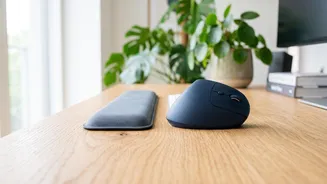
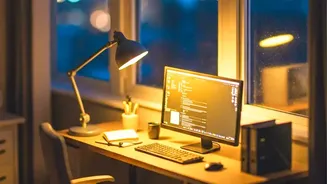
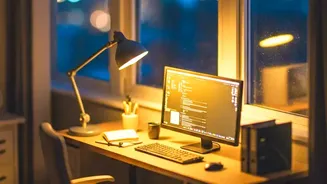
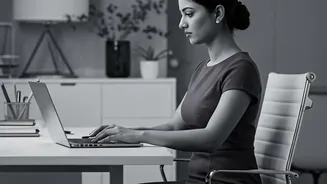
How your desk is set up plays a crucial role in preventing joint strain. Ergonomics is about fitting your environment to your body, not the other way around. Start with your chair: adjust the height so your feet are flat on the floor and your thighs are parallel to it. Your chair should have good lumbar support; if not, a small pillow or rolled towel can help maintain your spine's natural curve. Position your monitor at arm's length, with the top of the screen at or just below eye level to prevent neck strain. Your keyboard should be placed so your elbows are bent at a 90ndegree angle and your wrists are straight.
The Power of Regular Movement
Even the most ergonomic setup can't negate the effects of being stationary for hours. The most important strategy is to break up long periods of sitting. Set a reminder to stand up, stretch, and walk around for a few minutes every 30 to 60 minutes. Research shows that even short bursts of movement can reduce feelings of knee stiffness. Take phone calls while standing or walking. If you have a standing desk, alternate between sitting and standing throughout the day. The goal isn't to eliminate sitting entirely but to avoid staying in any single position for too long. Your next posture is your best posture.