






Why Are Marigolds the Balcony Gardener's Best Friend?
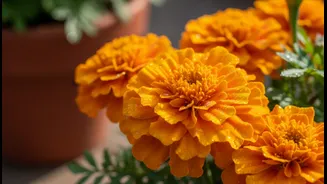
Marigolds are incredibly forgiving, making them ideal for beginners and time-strapped gardeners. They thrive in full sun, tolerate a range of soils, and can handle a bit of forgetfulness when it comes to watering. Unlike fussier plants, they bloom reliably
from spring until the first frost, providing a long season of cheerful colour with minimal intervention. This resilience takes the guesswork out of container gardening, where conditions like soil moisture and temperature can change quickly. Their easygoing nature means you spend less time worrying and more time enjoying your beautiful, vibrant space.
Choosing the Right Marigold for Your Pots
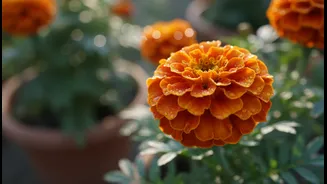
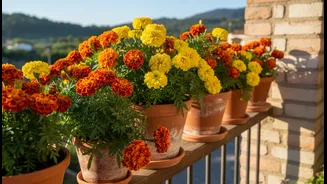
While most marigolds are container-friendly, some are better suited for pots than others. French marigolds (Tagetes patula) are a top choice for balconies. They are naturally smaller and bushier, typically growing between 15 to 45 cm, so they won't outgrow a standard container. Varieties like 'Bonanza', 'Durango', and 'Naughty Marietta' offer a dense carpet of colour. Signet marigolds (Tagetes tenuifolia) are another excellent, compact option with delicate, lacy foliage. While the larger African marigolds (Tagetes erecta) can be grown in pots, they require much larger containers—think 45 cm or more in diameter—to accommodate their height, which can reach up to a metre. For most balconies, sticking with the dwarf French or Signet varieties is the simplest path to success.
Potting and Planting for Success
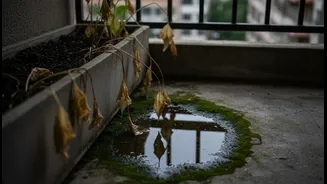
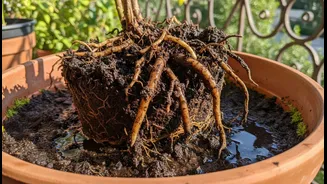
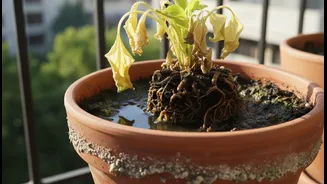
Getting started with marigolds is simple. The most crucial factor is drainage. Ensure your chosen pot has at least one drainage hole at the bottom to prevent waterlogging, which can lead to root rot. Terracotta pots are a great choice as they are porous and help soil breathe, though they may require more frequent watering than plastic pots. Use a quality, lightweight potting mix; avoid heavy garden soil, which compacts easily in containers. For even better drainage, you can add a handful of perlite or sand to your mix. When planting, don't overcrowd them. A single marigold is fine for a 15 cm pot, while a 30 cm pot can comfortably house two or three plants. This ensures good air circulation, which helps prevent issues like powdery mildew.
A Simple Care Routine: Sun, Water, and Tidy
Marigold care is wonderfully straightforward. First, they love sun, so place your pots in a spot that gets at least six hours of direct sunlight per day. A south or west-facing balcony is ideal. Second, water them using a soak-and-dry method. Check the soil, and when the top inch or two feels dry to the touch, water thoroughly until it runs out of the drainage holes. Then, let the soil dry out again before the next watering. Finally, to keep the blooms coming all season long, practice 'deadheading'. Simply pinch or snip off spent flowers. This simple tidying task prevents the plant from putting energy into making seeds and instead encourages it to produce more vibrant flowers.
More Than Just a Pretty Face
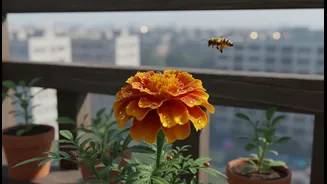
Beyond their good looks and low-maintenance nature, marigolds are functional. Their distinct scent isn't just for show; it's a natural pest repellent. Marigolds are famous for deterring common garden pests like whiteflies, aphids, and certain beetles. The flowers release a compound called limonene, which confuses pests and masks the scent of other nearby plants, like tomatoes or peppers, you might also be growing. Marigolds also attract beneficial insects, such as ladybugs, hoverflies, and pollinators like bees and butterflies, creating a healthier micro-ecosystem on your balcony. This makes them a perfect companion plant, actively protecting your other container vegetables while adding a splash of colour.