

The Moment of Totality
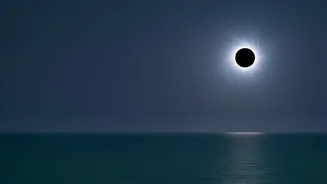
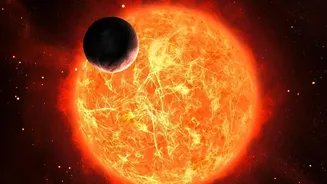
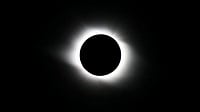
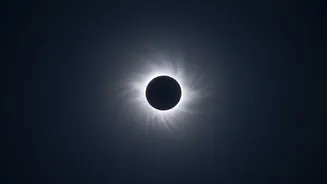
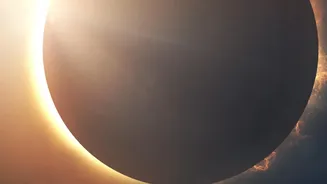
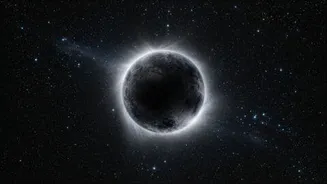
A total solar eclipse happens when the Moon passes directly between the Sun and Earth, completely blocking the face of the Sun. For those located in the center of the Moon’s shadow, known as the path of totality, daylight turns into a deep twilight. The
temperature can drop, and the Sun's faint, ethereal outer atmosphere—the corona—becomes visible to the naked eye. This pearly white crown of light, which is millions of degrees hotter than the Sun's surface, is normally impossible to see due to the Sun's intense brightness. It is only during these brief moments of totality that this stunning spectacle is revealed, offering a unique and often emotional experience for viewers.
A Journey Across the Globe
The path of totality for the 2026 eclipse is a dramatic one. It will begin over the remote Arctic regions of Russia before sweeping across Greenland, passing directly over western Iceland, and then heading south across the Atlantic. The eclipse will make its final landfall in northern Spain, offering a sunset totality for observers there. This marks the first time a total solar eclipse will be visible in mainland Europe since 1999, making it a particularly momentous event for the continent. Cities and towns in northern Spain, such as Bilbao, Gijón, and Palma de Mallorca, are preparing for an influx of visitors eager to witness the event. The maximum duration of totality, lasting 2 minutes and 18 seconds, will occur just off the coast of Iceland.
A Golden Opportunity for Science
Total solar eclipses are more than just beautiful sights; they are invaluable opportunities for scientific research. NASA and other space agencies are gearing up for the event. One major focus is studying the solar corona to better understand its extreme temperature and how it generates the solar wind, a stream of charged particles that constantly flows from the Sun. To achieve this, NASA plans to fly a WB-57 high-altitude research aircraft along the eclipse path. Equipped with specialized cameras, the jet will chase the Moon's shadow, extending the time scientists have to capture high-resolution images of the corona from above most of Earth's atmosphere. Additionally, the Nationwide Eclipse Ballooning Project will see student teams launching scientific balloons in Iceland and Spain to study how the sudden drop in sunlight affects Earth's atmosphere.
How to Watch From India and Beyond
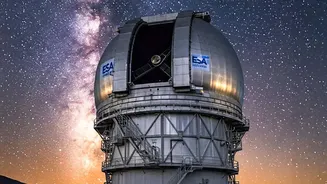
While the path of totality for the August 12, 2026, eclipse will not cross over India, you won't have to miss out on the spectacle. Both NASA and the European Space Agency (ESA) will host live broadcasts of the eclipse, providing telescope views from locations in Iceland and Spain. These streams, available on their websites and YouTube channels, will feature expert commentary explaining the science behind the event as it unfolds. This allows people from all over the world to experience the wonder of totality virtually. For those in Europe, North Africa, and parts of North America, a partial solar eclipse will be visible, where the Moon covers only a part of the Sun.
Safety is Paramount
For anyone planning to view the eclipse, whether from the path of totality or a region seeing a partial eclipse, safety is the top priority. It is never safe to look directly at the Sun without specialized eye protection designed for solar viewing. Regular sunglasses are not sufficient. During the partial phases of the eclipse, viewers must use certified eclipse glasses or a handheld solar viewer. The only time it is safe to look at the eclipse without protection is during the brief period of totality, when the Sun’s face is completely hidden. As soon as any part of the bright Sun begins to reappear, eye protection must be put back on immediately.