



From National Pride to a Global Marketplace
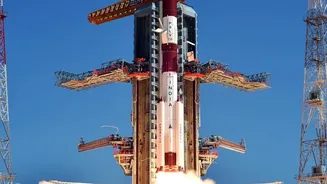
For decades, India's space ambitions were synonymous with the Indian Space Research Organisation (ISRO). The focus was clear: build robust rockets and satellites, with a workforce dominated by brilliant aerospace, mechanical, and electronics engineers.
This model brought immense success and national pride. But the landscape has changed dramatically. The global space economy is projected to exceed a trillion dollars, and India aims to capture a significant share, with targets to grow its space economy from around $8.4 billion to $44 billion by 2033. This growth is being fuelled by the private sector. Since opening up in 2020, India has seen the rise of over 400 space-tech startups. These companies aren't just supporting ISRO; they are building their own launch vehicles, satellite constellations, and downstream applications, creating a dynamic commercial market. This shift from a state-run monopoly to a market-driven ecosystem means the old skill sets are no longer enough.
The Data Deluge from the Stars
Modern space missions generate unimaginable volumes of data. Satellites observing Earth for agriculture, weather forecasting, and urban planning create a constant stream of information that needs to be processed and analysed. This is where the demand for data scientists, and experts in Artificial Intelligence (AI) and Machine Learning (ML), is exploding. ISRO itself is increasingly using AI for functions like autonomous navigation, spacecraft health monitoring, and analysing mission data. For private companies, the ability to rapidly process satellite data and provide insights to clients is their core business model. AI is crucial for making spacecraft more autonomous, optimising satellite observations, and even discovering new exoplanets. As a result, skills in programming languages like Python and MATLAB are now as critical to the space sector as understanding propulsion systems.
Wanted: Space Lawyers and Policy Experts
With hundreds of private satellites expected to launch in the coming years, new and complex questions are emerging. Who is liable if a private satellite collides with another? How are launch licenses and spectrum allocated? What are the rules for space debris mitigation or future resource mining on the Moon? These are not engineering problems; they are legal and ethical ones. The growing commercialisation of space has created an urgent need for space lawyers and policy experts. These professionals are needed to help companies navigate a web of international treaties and domestic regulations, handle contracts, manage insurance, and resolve disputes. As India builds its comprehensive legal framework for space, the demand for non-technical experts who can bridge the gap between technology, law, and business will only grow.
The Challenge of Building a New Talent Pipeline
While India produces a large number of engineering graduates, the space industry faces a shortage of experienced talent in specialised areas. This includes not only new-age skills but also mission-critical systems like propulsion and avionics where deep experience is required. Experts estimate that Indian companies could require as many as 40,000 technically skilled professionals in the next five years alone. To meet this demand, a fundamental shift is needed in education and training. Recognising this, government bodies like IN-SPACe are working to develop specialised skill-development courses and integrate space-related curricula into universities. The future workforce will require a multidisciplinary approach, combining core engineering principles with data analytics, robotics, and an understanding of the business and legal landscape of space.