



The Living Lights of the Pre-Monsoon
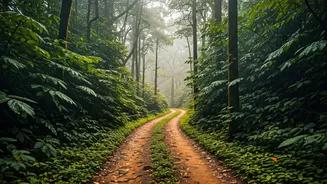
Just before the monsoon fully arrives, something magical happens in the forests of the Western Ghats. Millions of fireflies gather for their mesmerising mating ritual, turning entire landscapes into a twinkling wonderland. In places like Bhandardara and Purushwadi
in Maharashtra, firefly festivals celebrate this natural spectacle. As dusk falls, these tiny beetles light up, creating synchronised flashes that look like a galaxy of stars brought down to earth. These festivals typically run from mid-May through June, offering a fleeting window to witness this phenomenon. Visitors can join guided night walks through the forests, camp under the star-filled (and firefly-filled) sky, and experience a quiet, powerful connection to nature’s rhythms. It’s a short-lived event, a final, brilliant display before the heavy rains set in.
The Electric Blue Tides
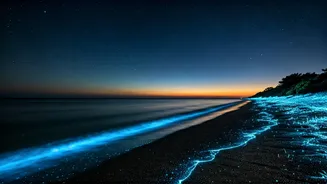
Imagine walking along a beach at night and seeing the waves crash in an electric blue glow. This is not science fiction; it's bioluminescence, a stunning natural light show created by marine plankton. While unpredictable, this phenomenon occurs along several Indian coastlines. In locations like Havelock Island in the Andamans, Mattu Beach in Karnataka, and parts of the Goa and Maharashtra coast, these tiny organisms light up when disturbed by the motion of the waves. The effect, often called a 'sea of stars', is most visible on dark, moonless nights. While some sightings are more likely in the post-monsoon months, the agitated waters of the current season can also trigger these displays, especially in warmer waters. It’s a surreal experience that turns a simple walk on the beach into a cosmic event.
A Valley of Earthly Stars
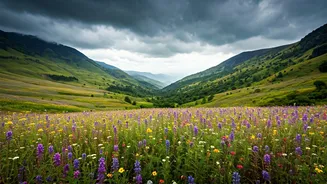
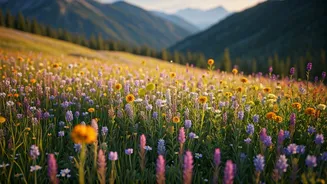
High in the Himalayas of Uttarakhand, another kind of star is shining. The Valley of Flowers National Park, a UNESCO World Heritage Site, is now open for its short but glorious season. Closed for most of the year under a blanket of snow, the valley transforms into a vibrant carpet of alpine flowers from June to October. The peak blooming season, however, is from mid-July to August, when over 600 species, including the elusive blue poppy, primulas, and daisies, are in full flower. This is when the valley truly lives up to its name, attracting trekkers and nature lovers from around the world. The journey itself is a rewarding trek through breathtaking mountain scenery, but the destination—a valley painted in every colour imaginable—is a spectacle that has to be seen to be believed. It’s a testament to the life that bursts forth when the conditions are just right.
The Roaring Falls of the Monsoon
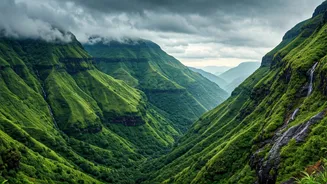
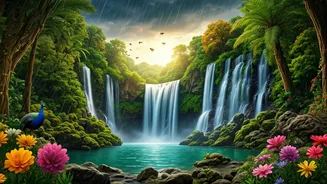
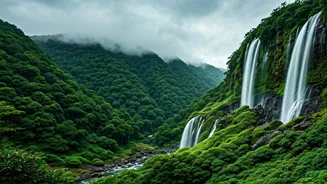
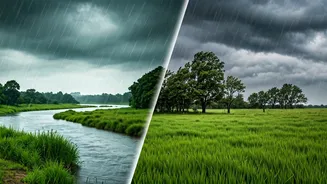
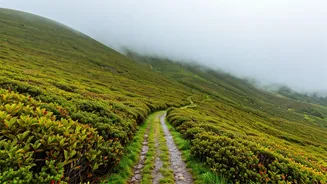
While not as subtle as glowing plankton, the power and beauty of India's waterfalls during the monsoon season are a spectacle in their own right. As the rains sweep across the country, rivers swell and cascades that were mere trickles in the dry season become roaring behemoths. Places like Dudhsagar Falls on the Goa-Karnataka border reach a thunderous peak in July, creating an awe-inspiring display of nature's force. In the Western Ghats, hill stations like Lonavala and Khandala come alive with countless waterfalls, drawing visitors who come to trek through misty landscapes and witness the region's lush transformation. Further south in Kerala, the misty mountains of Munnar and the waterfalls of Coorg in Karnataka become intensely green and full of life, offering a different but equally compelling natural show. These seasonal spectacles are a powerful reminder of the monsoon's role in rejuvenating the land.