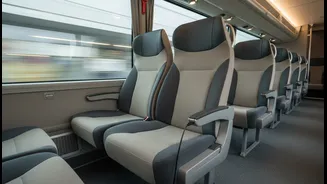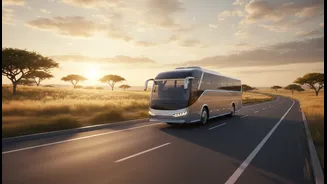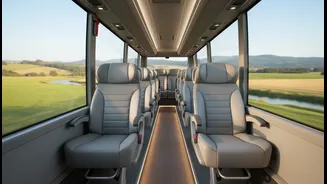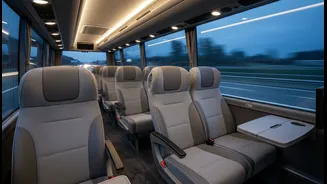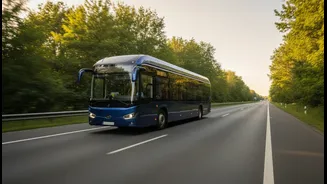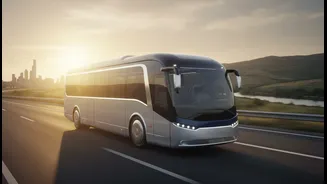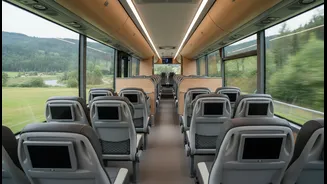






A New Standard in Passenger Comfort
The primary shift with premium electric buses is the dramatic improvement in passenger experience. Unlike traditional diesel engines that produce constant noise and vibration, electric motors are nearly silent and deliver smooth, gearless acceleration.
Passengers describe the ride as a 'glide' rather than a series of lurches, creating a calmer and less fatiguing journey. This reduction in noise not only makes for a more peaceful trip but also makes onboard announcements clearer and conversations easier. Operators are pairing this inherent quietness with upgraded amenities like better climate control, ergonomic seating, onboard Wi-Fi, and personal charging ports, positioning these buses as a genuinely premium travel option. Testimonials from early adopters highlight the feeling of safety and comfort, particularly for night journeys.
The Environmental and Health Imperative
The most significant societal benefit of electrifying intercity bus fleets is the elimination of tailpipe emissions. Diesel buses are major contributors to urban air pollution, releasing harmful pollutants like particulate matter (PM2.5), nitrogen oxides, and carbon monoxide. Studies have shown that a single electric bus can save over 70 tonnes of CO2 emissions annually compared to its diesel counterpart, representing a 71% reduction in emissions per passenger-kilometre. This has a direct impact on public health, especially in and around crowded bus terminals where diesel exhaust concentration is high. With cities like Delhi and Bengaluru frequently battling hazardous air quality, a large-scale shift to electric buses offers a tangible path toward cleaner air and healthier communities.
The Compelling Business Case
While the upfront cost of an electric bus can be more than double that of a comparable diesel model, the long-term economics are increasingly persuasive for operators. The main advantage lies in lower operational costs. With no expenditure on volatile diesel fuel and significantly reduced maintenance needs due to fewer moving parts, operators can save ₹15–20 lakhs per bus annually. This predictable cost structure is a major competitive advantage, allowing operators to maintain stable ticket prices even when fuel costs spike. This economic logic is driving investment, with companies like zingbus and JBM planning to deploy hundreds of new electric buses on high-demand intercity routes connecting cities like Bengaluru, Hyderabad, Mumbai, and Pune.
Navigating the Roadblocks to Adoption
Despite the clear benefits, the transition is not without its challenges. The high initial capital investment remains a significant barrier for many private operators, who run the vast majority of India's bus fleet. Financing can be difficult as institutions often perceive EVs as high-risk assets. Another major hurdle is the lack of adequate charging infrastructure along highways. While city buses can rely on depot charging overnight, intercity routes require a network of en-route fast chargers that largely doesn't exist yet. Range anxiety and concerns about battery life and replacement costs also weigh on operators' minds.
Government Push and the Path Forward
The Indian government is actively trying to accelerate this transition. Schemes like FAME (Faster Adoption and Manufacturing of Electric Vehicles) have provided subsidies to lower the upfront cost, though these have primarily benefited state-run city transport so far. Recognizing the need to support the private sector, the government is reportedly considering a new, decade-long incentive program worth over $1 billion, which would include benefits like interest subsidies and credit guarantees specifically for private commercial vehicle operators. This policy support, combined with the strong business case and clear passenger demand for a better travel experience, is setting the stage for a new era. The opportunity is not just to replace diesel with electric, but to fundamentally upgrade intercity travel for millions of Indians.