



A Landmark Investment
The $150 million fundraising round is one of the largest early-stage investments in the global robotics sector and a significant milestone for the Indian technology ecosystem. Andreessen Horowitz, famous for its early and transformative bets on companies
like Facebook and Airbnb, co-led the round alongside F-Prime, the venture capital arm linked to Fidelity Investments. The deal, which values Eka Robotics at a remarkable $1.45 billion, also saw participation from existing seed investors Obvious Ventures and E14 Fund, among others. This influx of capital from such high-profile investors is more than just financial fuel; it is a powerful endorsement of Eka's technology and its potential to redefine industrial automation on a global scale.
Who Is Eka Robotics?
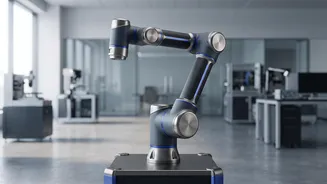
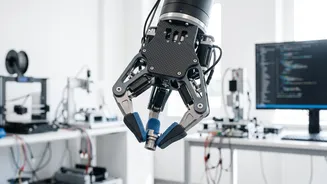
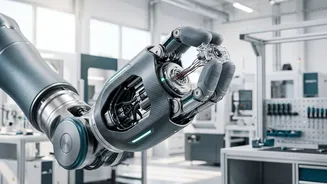
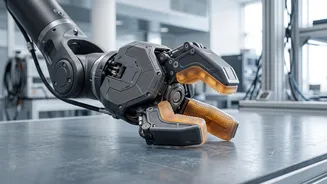
Founded in 2024 by MIT professor Pulkit Agrawal and former Google DeepMind researcher Tuomas Haarnoja, Eka Robotics is not just building robots; it is developing a new kind of intelligence for them. The company focuses on one of the toughest challenges in robotics: dexterous manipulation. Its core innovation is a 'vision-force-action' model, which combines sight with a sense of touch. While most robots 'see' an object, Eka's machines can 'feel' it, using advanced force sensors in their grippers to adjust their hold in real-time. This allows them to handle delicate or unfamiliar objects with superhuman speed and precision, a capability that has long eluded automated systems. The company trains its models using reinforcement learning in physics simulators, generating thousands of hours of experience in minutes to master tasks without needing human demonstrations.
Superhuman Performance in Action
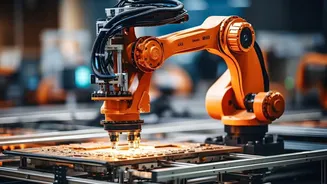
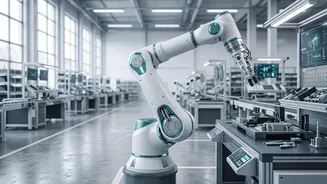
The results of this unique approach are impressive. Eka reports its robots can pick and place objects at a rate of 1,500 per hour, more than double the average human worker's speed of around 600 per hour, with over 95% accuracy. These are not just single-purpose machines. The same system can be tasked with screwing in a lightbulb or inserting wires, demonstrating a level of versatility crucial for modern manufacturing and logistics. This ability to generalise tasks while maintaining high performance is what makes Eka a game-changer, breaking the traditional trade-off where robots were either highly specialised and fast or versatile but slow. Eka is already running pilot programs with industrial customers for tasks like object picking and wire handling.
The Silicon Valley Stamp of Approval
For the Indian startup scene, the involvement of Andreessen Horowitz is particularly significant. While the firm has historically been US-centric, it has shown increasing interest in India, earmarking funds for the region's burgeoning startup ecosystem. An investment of this magnitude in a deep-tech company like Eka signals a major shift. It validates the country's growing reputation not just as a market for software services but as a hub for fundamental technological innovation. As one a16z partner noted, Eka's approach is seen as the first to truly solve manipulation with the generality and throughput needed for wide-scale commercial deployment.
Fueling India's Automation Wave
Eka plans to use the $150 million to scale its technology and accelerate customer deployments. This funding arrives as India's industrial robotics market is poised for explosive growth. Projections show the market expanding significantly, with some analysts predicting a compound annual growth rate (CAGR) of over 15% through 2034. Government initiatives like 'Make in India' and the increasing need for efficiency and precision in manufacturing are driving this demand. Eka's intelligent robots are perfectly positioned to serve booming sectors like electronics manufacturing, e-commerce fulfilment, and automotive assembly, helping to build the smart factories of the future.