







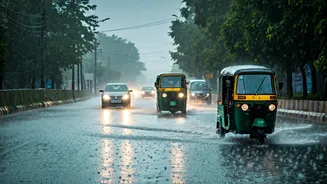


Monsoon Intensifies Across the Region
The India Meteorological Department (IMD) has forecast an active spell of monsoon conditions across northwestern India, with heavy rainfall, thunderstorms, and gusty winds expected to continue across Delhi-NCR. This intensified rainfall is the primary
cause of the current travel disruptions. Following a period of intense heat, the rains have brought relief but also significant challenges for daily commuters. Widespread waterlogging is being reported across the capital and its satellite cities, turning routine journeys into unpredictable ordeals. Officials are urging residents to monitor weather updates closely as conditions can change rapidly.
Key Areas Facing Severe Waterlogging
Several key arterial roads and low-lying areas in Delhi, Gurgaon, and Noida are experiencing severe waterlogging, leading to massive traffic snarls. In Gurgaon, areas such as the Delhi-Gurgaon expressway, IFFCO Chowk, Narsinghpur, and Golf Course Road are particularly affected, with past instances showing commuters stranded for hours. In Delhi, stretches like Mathura Road, Rohtak Road, and areas near Kalindi Kunj have seen traffic severely impacted by inundated roads and potholes. Noida is also grappling with disruptions, compounded by pre-existing diversions for infrastructure projects and VIP movements, affecting major routes like the DND Flyover and the Noida-Greater Noida Expressway. Commuters have reported that even short journeys are taking hours, with some vehicles breaking down in knee-deep water.
Impact on Public Transport
Public transportation services are also feeling the strain. While the Delhi Metro is generally considered a more reliable option during heavy rains, speed restrictions may be imposed on elevated sections for safety. Overcrowding is a major issue as more people opt for the metro to avoid flooded roads. Bus services are significantly affected, with many routes altered or delayed due to waterlogged bus stands and impassable roads. In some of the worst-hit areas, videos have shown buses partially submerged, highlighting the severity of the situation. For those relying on public transport, it is crucial to account for longer waiting times and potentially crowded conditions.
How to Plan Your Journey Effectively
Given the unpredictable conditions, planning is more critical than ever. Before starting your journey, use real-time traffic navigation apps like Google Maps or Waze, which can help you identify congested routes and flooded zones. The Delhi Traffic Police regularly posts updates and advisories on its social media handles and website, providing information on road closures and diversions. If possible, consider flexible work arrangements. Some authorities in Gurgaon have previously advised corporate offices to allow employees to work from home during periods of heavy rainfall to ease congestion. If you must travel, allow for significant extra time, ensure your vehicle is in good condition, and avoid driving through deep water, which can damage your car and pose a safety risk.
Ongoing Infrastructure Work Adds to Woes
It’s important to note that the monsoon-related issues are compounded by ongoing infrastructure projects and other planned disruptions across NCR. For instance, night-time closures on the Bhogal Flyover for RRTS corridor work are scheduled, including on July 2nd, affecting traffic on Mathura Road. Similarly, Noida and Greater Noida frequently see diversions due to development work or VIP visits, which can suddenly alter traffic flow on major expressways. These pre-planned closures, combined with the sudden chaos of rainfall, create a perfect storm for traffic management, making it essential for travellers to stay informed about all potential obstacles on their route.