




The government has updated the rules for Pollution Under Control (PUC) certificates, changing how often you need to get your vehicle tested. These new, streamlined regulations mean longer validity for some and new timelines for others.
The New Age-Based PUC System
The Ministry of
Road Transport and Highways has introduced a significant change to how PUC certificates work, shifting to a system based on your vehicle's age and emission standard. Notified on November 13, 2026, the Central Motor Vehicles (Sixteenth Amendment) Rules, 2026, primarily benefit owners of newer, cleaner vehicles. Instead of a uniform one-year validity for all BS-VI vehicles, the new rules create a tiered structure, offering much longer intervals between tests for recently purchased cars and bikes. The goal is to reduce compliance burdens on owners of less-polluting vehicles while maintaining stricter checks on older ones.
New Validity Periods: A Detailed Breakdown
The biggest change affects BS-VI vehicles, which are now treated differently based on their age and whether they are for private (non-transport) or commercial (transport) use. For private BS-VI vehicles up to six years old, the PUC certificate is now valid for three years. If your private BS-VI vehicle is between six and ten years old, the validity is one year. For those older than ten years, it's every six months. Commercial BS-VI vehicles up to six years old get a two-year validity. For older vehicles, the rules are simpler. BS-IV vehicles require a check every six months, while older BS-I, BS-II, and BS-III models need a new PUC certificate every three months.
Why Were These Changes Made?
These revisions are part of a broader strategy to improve air quality while making life easier for compliant vehicle owners. By extending the validity for newer BS-VI vehicles, which have more advanced emission control technology, the government acknowledges their lower environmental impact. This reduces the hassle and cost for millions of owners. At the same time, by maintaining frequent checks for older vehicles, the system ensures that higher-polluting cars and bikes are regularly monitored and maintained. The rules also standardise PUC requirements across the country, removing inconsistencies that previously existed between states. This uniformity, combined with a central digital database, makes enforcement more efficient and transparent.
What You Need to Do Now
For most vehicle owners, no immediate action is required if you have a valid PUC. The new validity periods will apply upon your next renewal. However, it's a good time to check your certificate's expiry date. You can do this online through the official Parivahan portal (puc.parivahan.gov.in). You will need your vehicle's registration number and the last five digits of its chassis number. The mParivahan mobile app also shows your PUC status. When it's time for renewal, simply visit any authorised emission testing centre. The test itself takes only a few minutes. If you renew within 10 days before your current certificate expires, the new validity will start from the expiry date, ensuring continuous coverage.
Stiff Penalties for Non-Compliance
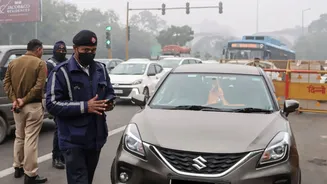
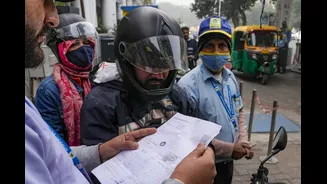
Driving without a valid PUC certificate remains a serious offence. Under the Motor Vehicles Act, you can be fined up to ₹10,000 for non-compliance. In some cases, penalties can even include imprisonment for up to three months and suspension of your vehicle's registration. With digital enforcement on the rise, including automated checks at fuel pumps in some cities, it's harder than ever to avoid detection. An expired PUC can also block the renewal of your vehicle's insurance policy, as a valid certificate is a mandatory requirement for insurers.