


1. Find a Sighting Opportunity
You can't just look up on any given night and expect to see the ISS. Its visibility depends on its orbit and the time of day. The station is only visible because it reflects sunlight, so the best viewing times are shortly after sunset or before sunrise.
This is when your location is dark, but the station, flying 400 kilometres high, is still illuminated by the sun. To find out when it will pass over your location, use a dedicated tracking tool. NASA's official Spot The Station website and app are excellent resources. You simply enter your city, and it provides a list of upcoming viewing times, including how long the pass will last and how high it will appear in the sky. Other popular apps like ISS Detector and Heavens-Above offer similar services, often with notifications to remind you.
2. Know What You're Looking For
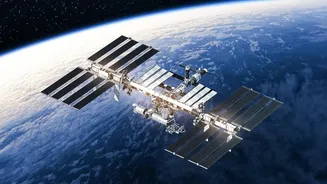
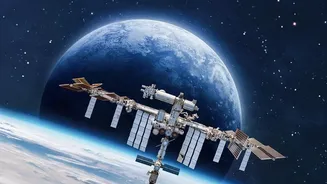
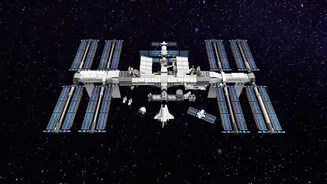
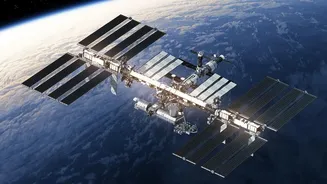
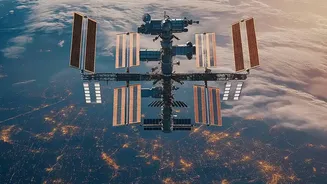
The ISS does not look like a conventional aircraft. It appears as a very bright, steady point of light moving silently and quickly across the sky. Think of it as a fast-moving star that doesn't twinkle or change direction. Unlike an airplane, it does not have flashing or blinking lights. Because of its high reflectivity and large solar arrays, it can be surprisingly bright—often the brightest object in the night sky besides the Moon, and easily visible even from light-polluted cities. A typical pass lasts only a few minutes from the time it appears on the horizon to when it disappears, either by setting or by entering Earth's shadow, at which point it seems to just fade out.
3. Check the Weather and Your Location
The most crucial factor for a successful sighting is a clear sky. Clouds will completely obscure the view, so check your local weather forecast before you head out. Beyond that, your viewing location matters. While the ISS is bright enough to be seen from urban areas, your experience will be much better if you can minimize light pollution. Find a spot with an unobstructed view of the sky, away from tall buildings, trees, and bright streetlights. This will make it easier to spot the station as it rises from the horizon. Give your eyes at least five minutes to adjust to the darkness before the scheduled pass time; this will significantly improve your ability to see fainter objects in the sky.
4. Understand the Sighting Data
When you get a sighting alert, it will come with a few key pieces of information. 'Appears' tells you the direction (e.g., WSW for West-Southwest) where the station will first become visible. 'Max Height' is the highest point it will reach in the sky, measured in degrees. Zero degrees is the horizon, and 90 degrees is directly overhead. Passes with a higher maximum height (over 40 degrees is considered good) are brighter, longer, and easier to see. 'Disappears' indicates where it will exit your field of view. Knowing these details helps you position yourself correctly and know exactly where to look so you don't miss the brief but spectacular event.
5. Prepare Your Equipment (or Lack Thereof)
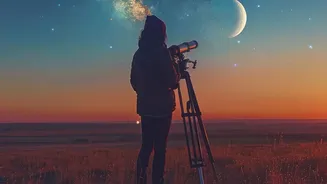
The best part about spotting the ISS is that you don’t need any special equipment. It is one of the few astronomical events that is perfectly suited for naked-eye viewing. In fact, a telescope is often impractical because the station moves so quickly across the sky, making it difficult to track. However, a pair of binoculars can enhance the experience. Through binoculars, the bright point of light will appear larger and you might even be able to discern its golden hue, which comes from the reflection off its large solar panels. But if all you have are your own two eyes, that’s more than enough to enjoy the show. The main goal is to be in the right place at the right time, looking in the right direction.