







From Cold War Rivalry to Global Collaboration
For decades, space was the ultimate arena for superpower competition. The Space Race between the United States and the Soviet Union was a zero-sum game of technological one-upmanship, where every launch was a statement of national prowess. The goal was to
be first, to be seen, to plant the flag. This mindset, while driving incredible innovation, framed space as a frontier to be conquered for national glory. However, the rapidly growing number of satellites and space-faring nations has made this old model obsolete. With more than 90 countries now possessing space capabilities, the domain is more crowded and complex than ever, necessitating a shift from competition to coordination.
The New Currency: Earth Observation Data
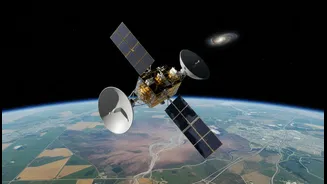
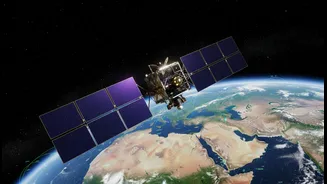
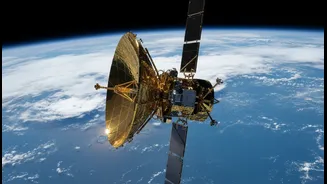
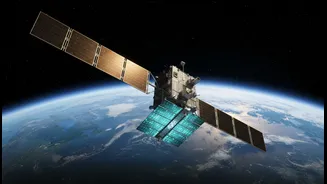
The game-changer is satellite data, particularly from Earth observation (EO). These satellites provide a constant stream of information on everything from weather patterns and sea levels to crop health and deforestation. This data is crucial for tackling some of humanity's biggest shared challenges, such as climate change, food security, and natural disasters. Recognizing that these global problems require global solutions, space agencies are increasingly entering into reciprocal data-sharing agreements. The principle is simple: we will give you free and open access to our satellite data if you do the same for us. This creates a network of shared knowledge that is far more valuable than any single nation's closely guarded information.
India's Role in a Collaborative Cosmos
The Indian Space Research Organisation (ISRO) has become a key player in this new era of space diplomacy. ISRO actively collaborates with a host of international partners, including NASA, France's CNES, and the European Space Agency (ESA). A landmark agreement with the European Commission, for example, gives India free access to data from the Copernicus Sentinel satellite family, while ISRO provides data from its own fleet of EO satellites in return. These partnerships are not just symbolic; they are yielding concrete results. Joint missions like the Indo-French satellites MEGHA-TROPIQUES and SARAL provide critical data on climate and oceanography to the global scientific community. Furthermore, ISRO is a vital contributor to international disaster response charters, providing satellite data to help manage crises around the world.
Data as a Diplomatic Tool
Shared data does more than just power scientific models; it builds trust and fosters cooperation. When nations collaborate on a joint mission like the NASA-ISRO Synthetic Aperture Radar (NISAR), they create mutual dependencies and shared technical standards that incentivize responsible behavior in space. This 'data diplomacy' extends to managing the space environment itself. With tens of thousands of objects now orbiting Earth, sharing Space Situational Awareness (SSA) data is critical to avoid collisions that could create more debris and endanger all satellites. This practical necessity forces even geopolitical rivals to communicate and coordinate, turning a shared risk into a basis for cooperation.
Challenges on the Orbital Horizon
The path to a fully collaborative space environment is not without obstacles. National security concerns often limit what data can be shared, especially for military or dual-use satellites. Commercial competition also plays a role, as private companies may be reluctant to share proprietary data that gives them a market edge. Furthermore, the sheer volume of data being generated presents a massive challenge for processing and analysis. There are also complex ethical questions about privacy and the potential for misuse of high-resolution imagery. Overcoming these hurdles will require building greater trust and establishing clear international norms and standards for data governance in space.