




The Ultimate Safety Net in Space
Before we can cheer for Indian astronauts orbiting the Earth, we have to be certain they can escape if anything goes wrong. This is the job of the Crew Escape System (CES). Think of it as the most sophisticated ejection seat ever built, but instead of ejecting
just a pilot, it’s designed to pull the entire crew capsule away from the rocket in a fraction of a second. Whether an emergency happens on the launch pad or minutes into the flight, the CES is the astronauts' single most important lifeline. ISRO's recent test flights are all about making sure this system is absolutely foolproof, because when it comes to human spaceflight, there is no room for error.
Testing for a Launchpad Emergency
An emergency can happen even before the rocket leaves the ground. To prepare for this, ISRO conducted a 'Pad Abort Test' (PAT) back in 2018. In this test, a simulated crew module was placed on the launch pad, and the escape system was fired. Powerful, quick-acting motors ignited, pulling the 12.6-tonne module up and away, reaching an altitude of nearly 2.7 kilometres before parachuting down into the Bay of Bengal. This 259-second test proved that if a critical failure occurs during the final countdown, the crew can be safely whisked away from the danger zone.
Surviving a Mid-Flight Crisis
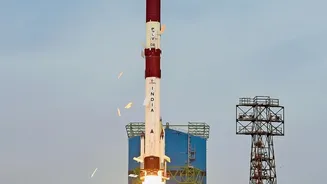
What if the problem occurs after launch, when the rocket is already hurtling through the atmosphere at supersonic speeds? This is what the high-altitude abort tests are for. The most significant of these was the Test Vehicle Abort Mission-1 (TV-D1) in late 2023. For this test, ISRO launched a special rocket that went up to an altitude of about 15 km and reached a speed just over Mach 1 (the speed of sound). At that precise moment, an abort was triggered. The Crew Escape System fired flawlessly, separating the crew module from the rocket and using its parachutes to descend for a safe splashdown in the sea. The success of TV-D1 was a massive confidence boost, proving the escape system works under the extreme conditions of a real flight.
Mastering the Gentle Return
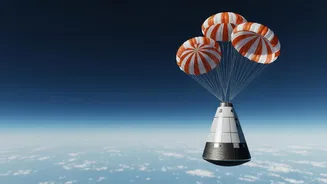
Getting the crew away from a failing rocket is only half the battle; they also need to land safely. This is where the parachute system comes in, which is tested through Integrated Air Drop Tests (IADT). In a series of tests, including one as recent as April 2026, ISRO has been perfecting this sequence. During these tests, a Chinook helicopter lifts a dummy crew module, weighing over 5 tonnes, to an altitude of a few kilometres and drops it. A complex sequence of ten parachutes, including smaller drogue chutes to stabilise the module and three massive main parachutes, deploy to slow the capsule down for a gentle splashdown. These tests validate that the deceleration system can handle the module's weight and bring it to a safe landing speed.
The Final Steps to a Historic Launch
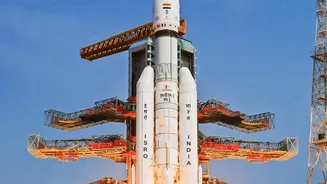
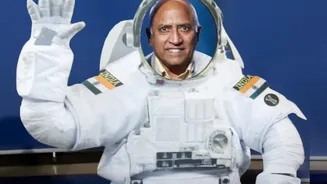
These comprehensive tests—from the pad, to high altitude, to the final descent—are all pieces of a larger puzzle. With the astronaut candidates having completed training and the human-rated launch vehicle (HLVM3) ready, these successful validations are paving the way for the next big steps. The roadmap includes the first uncrewed Gaganyaan mission, known as G1, which is targeted for the end of 2026. That mission will be a full dress rehearsal, testing every system in space before the first crewed flight, currently anticipated in 2027 or 2028. Each successful test brings India closer to joining the elite club of nations with human spaceflight capability.