





Finding time for exercise in a packed schedule can feel impossible. But what if you did not need a full hour? The idea of short, five-minute workouts is gaining ground, offering a practical way to stay active. Here’s what you need to know.
Understanding the Official Guidelines
Before diving
into short workouts, it is helpful to know the goal. Health authorities like the World Health Organization (WHO) and the Centers for Disease Control and Prevention (CDC) provide clear recommendations. For substantial health benefits, adults should aim for 150 to 300 minutes of moderate-intensity aerobic activity or 75 to 150 minutes of vigorous-intensity aerobic activity per week. Additionally, they recommend muscle-strengthening activities that work all major muscle groups on at least two days a week. That 150-minute number might sound daunting, but the good news is you do not have to do it all at once. The guidelines emphasize that activity can be accumulated throughout the week.
The Science of 'Exercise Snacking'
The concept of breaking up exercise into smaller chunks is often called 'exercise snacking'. This approach involves short bursts of activity, from a few seconds to several minutes, spread throughout the day. Research increasingly shows that these mini-workouts are surprisingly effective. Studies have found that accumulating exercise in short bouts can provide similar benefits to one continuous session for outcomes like blood pressure, cardiovascular fitness, and blood sugar control. The key is that the total volume of activity adds up. In 2020, the WHO even removed its previous recommendation that exercise had to last at least 10 minutes to count, acknowledging that all movement matters. This shift makes fitness more accessible, helping to build consistency, which many experts agree is more important than the intensity of any single workout.
A Five-Minute Cardio Burst
A quick cardio session can elevate your heart rate, boost your mood, and improve circulation. No equipment is necessary, making it easy to do at home or in the office. Try this simple routine: perform each exercise for 45 seconds, followed by 15 seconds of rest before moving to the next. 1. Marching in Place: Start by lifting your knees high and swinging your arms. This serves as a gentle warm-up. 2. Jumping Jacks: A classic full-body move that gets your heart pumping. 3. High Knees: Run in place, bringing your knees up toward your chest. 4. Butt Kicks: Run in place, trying to kick your heels toward your glutes. 5. Mountain Climbers: From a plank position, alternate driving your knees toward your chest. This circuit provides a vigorous workout that effectively breaks up long periods of sitting.
A Quick Bodyweight Strength Circuit
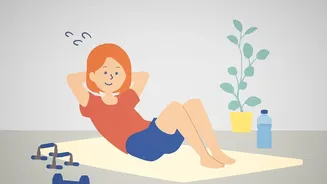
Strengthening your muscles is crucial for metabolism and overall function. Five minutes is enough time to work major muscle groups using compound exercises, which are more efficient. Try this circuit, performing each move for about one minute. 1. Bodyweight Squats: Stand with feet shoulder-width apart and lower your hips as if sitting in a chair, keeping your chest up. This works your legs and glutes. 2. Push-Ups: In a plank position, lower your body toward the floor. For a modification, perform them on your knees. This targets the chest, shoulders, and arms. 3. Lunges: Step one foot forward or backward and bend both knees to 90 degrees. Alternate legs to work on balance and leg strength. 4. Plank: Hold a straight line from your head to your heels, engaging your core. 5. Glute Bridges: Lie on your back with knees bent and lift your hips toward the ceiling, squeezing your glutes.
Making Every Minute Count
The biggest advantage of five-minute routines is their flexibility. You can 'snack' on exercise whenever you have a small window of time. Squeeze in a set of squats while your coffee brews, do some lunges during a television commercial break, or take a five-minute brisk walk during your lunch hour. The key is to see these small efforts as cumulative. To meet the 150-minute weekly goal, you would need to complete six of these five-minute sessions per day, five days a week. It may sound like a lot, but integrating them into your existing routine makes it feel manageable. Track your sessions on a calendar or in an app to stay motivated and watch your minutes add up.