



Why It Happens: A Kitchen Conundrum
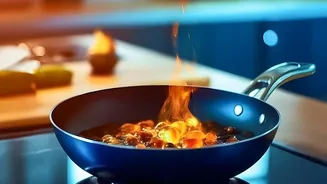
The core of the issue lies in the physics of heat transfer. When you expose food to high heat, the outer layers cook rapidly. This intense energy causes the moisture near the surface to evaporate quickly, forming a crust. While a golden-brown exterior
is often desirable, the problem arises because heat needs time to travel from the surface to the centre of the food, a process called conduction. If the external heat is too aggressive, the surface will overcook and dehydrate long before the interior reaches its ideal temperature, leaving you with a dish that is simultaneously burnt and underdone.
The Case for Low and Slow
One of the most effective strategies to combat this issue is to lower the cooking temperature. Cooking at a lower, more moderate heat allows the energy to penetrate the food more gently and evenly. This gives the centre time to cook through without subjecting the exterior to a prolonged, moisture-sapping assault. For convection ovens, which circulate hot air and cook faster, it's often recommended to reduce the recipe's temperature by about 15°C to prevent drying. This low-and-slow approach is ideal for tougher cuts of meat with a lot of connective tissue, as it helps break down those fibres into tender gelatin over time, resulting in a succulent and flavourful dish.
Harnessing the Power of Moisture
Another powerful tool in your arsenal is moisture itself. Using moist-heat cooking methods can make a world of difference. Techniques like braising, stewing, and poaching involve cooking food in a liquid like broth or water, which prevents it from drying out. For roasting or baking, you can introduce humidity into the oven by placing a pan of water on a lower rack. Covering your dish with a lid or aluminum foil also traps steam, creating a moist environment that protects the food. For meats, a saltwater brine before cooking can significantly increase its moisture content, providing an internal buffer against the drying effects of heat.
The Searing Strategy
Many people believe that searing meat at a high temperature “seals in the juices.” This is a long-standing kitchen myth. Searing is for flavour. The browning that occurs, known as the Maillard reaction, creates hundreds of complex aromatic compounds that make food delicious. However, it doesn't create an impermeable barrier. A better approach is to sear for flavour and then finish the cooking process using a gentler method. You can either sear the food in a hot pan first and then transfer it to a lower-temperature oven, or try the “reverse sear” method by cooking the food low-and-slow first and finishing with a quick, high-heat sear right before serving.
The Final, Crucial Step: Rest
The cooking process doesn't end the moment you remove food from the heat. As meat cooks, its muscle fibres tighten and push juices toward the centre. If you slice into it immediately, those juices will spill out onto your cutting board, leaving the meat dry. Allowing the meat to rest, lightly tented with foil, gives the fibres time to relax and reabsorb that flavourful moisture, distributing it evenly throughout the cut. This simple act of patience is critical. A general rule is to rest the meat for 5-10 minutes for smaller cuts and 15-20 minutes for larger roasts. This resting period also allows for “carryover cooking,” where the residual heat continues to raise the internal temperature slightly, ensuring a perfect finish.