




Meet Galangal: Ginger's Bolder Cousin
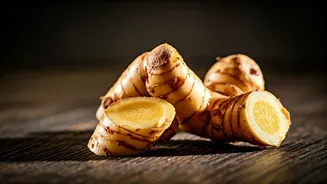
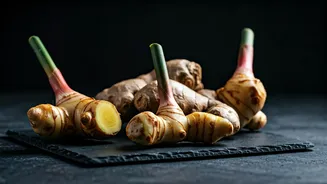
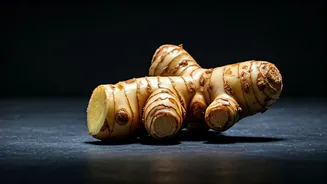
At first glance, you might mistake galangal for ginger. They are both knobby, subterranean stems, known as rhizomes, from the same plant family, Zingiberaceae, which also includes turmeric and cardamom. Sometimes called 'Thai ginger' or 'Siamese ginger',
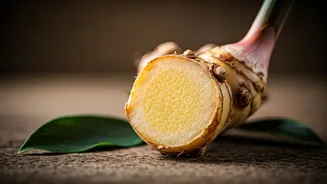
galangal is a staple in Southeast Asian cooking, particularly in Thai, Indonesian, and Malaysian cuisine. But make no mistake—this is not a simple understudy. Galangal has smoother, paler skin, sometimes with a pinkish hue, and its flesh is significantly denser and harder than ginger's. This density means it can't be easily grated; it must be thinly sliced or pounded to release its unique character.
A Tale of Two Flavours
The biggest difference between galangal and ginger lies in the taste. While ginger offers a warm, pungent spiciness with a hint of sweetness, galangal is a different story altogether. Its flavour profile is sharper, more assertive, and complex. Connoisseurs describe it as having a pine-like, earthy aroma with sharp, citrusy top notes and a peppery kick. Unlike ginger's mellow heat, galangal provides a more astringent, bold flavour that is crucial for the authentic taste of many regional dishes. For this reason, the two are not interchangeable in recipes; substituting one for the other will fundamentally change the dish's final profile.
A Star in the Kitchen
Galangal, known as 'kha' in Thai, is the soul of many iconic Southeast Asian dishes. It is a non-negotiable ingredient in Thai soups like the hot and sour tom yum and the creamy coconut-based tom kha gai, where its aromatic essence infuses the broth. It also forms the fragrant base of countless curry pastes, pounded together with other ingredients like lemongrass and chilli to create a complex foundation of flavour. In Malaysia and Indonesia, it's known as 'lengkuas' and is essential in dishes like beef rendang and the spicy noodle soup, laksa. Typically, thick slices are added to soups and stews to release their flavour and are then removed before serving because of their tough, fibrous texture.
More Than Just Flavour
For centuries, galangal has been a cornerstone of traditional medicine, including Ayurveda and Traditional Chinese Medicine. It was historically valued for a wide range of uses, from aiding digestion and reducing inflammation to treating colds. Modern studies are beginning to explore these traditional applications. Galangal is rich in antioxidants, which are beneficial compounds that help protect cells from damage. It has also been noted for its anti-inflammatory, antimicrobial, and digestive properties. While it’s a valuable addition to a healthy diet, it's important to remember that much of the scientific research is still emerging.
Bringing Galangal Home
Ready to experiment? You can find fresh galangal year-round in most Asian markets and some larger supermarkets, often near the ginger. Look for firm, plump rhizomes without any shrivelled or moldy spots. Because it's much harder than ginger, you'll need a sharp knife to slice it. Fresh, unpeeled galangal can be stored in the fridge for two to three weeks if wrapped properly. For longer-term storage, it freezes exceptionally well. You can freeze it whole, or peel and slice it first so it's ready to be tossed into your next culinary adventure.