






Your Pocket Planetarium
The days of needing expensive telescopes and complex star charts to navigate the night sky are long gone. Today, your smartphone is a powerful portal to the cosmos. Thanks to built-in sensors like a gyroscope and GPS, your phone knows exactly where it
is and which way it's pointing. When paired with a stargazing app, it overlays a map of the stars, constellations, and planets onto your screen in real-time. These apps use augmented reality (AR) to show you precisely what you're looking at, transforming a confusing star field into a navigable map. Many are incredibly user-friendly and designed specifically for beginners.
The Planets to Spot This Month
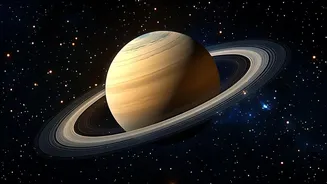
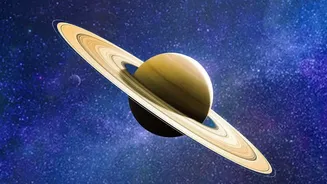
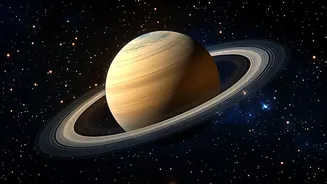
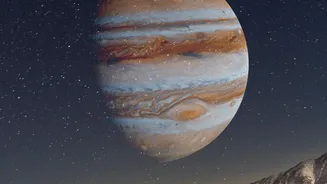
Planets are ideal targets for city dwellers because they are much brighter than distant stars. For September 2026, a few celestial wanderers are putting on a show. Venus is the star of the evening, reaching its peak brilliance and shining intensely in the western sky just after sunset. It's so bright you absolutely cannot miss it. Saturn is visible for most of the night and is approaching its own peak brightness in early October, making it a great object to track. For early risers, Mars and Jupiter are visible in the pre-dawn sky, with Jupiter being particularly bright. While Neptune is also at its brightest this month, you will need more than just a phone to spot its faint, magnitude +7.8 glow.
Essential Free Apps for Urban Astronomers
You don't need to spend money to get started. Several excellent free apps can guide you. SkyView Lite and Star Chart are fantastic for beginners, offering simple point-and-identify functionality. Stellarium Mobile is another top-tier free choice, known for its realistic and comprehensive star maps. For those looking for a feature-rich experience without a price tag, Sky Tonight offers a huge database of celestial objects for free. Star Walk 2 is also highly recommended for its beautiful design and ease of use, though some advanced features may require a purchase. Simply download one, give it location access, and point it at the sky.
A Step-By-Step Guide to Your First Sighting
Ready to find a planet? First, find the best possible viewing spot. This could be a park, a rooftop, or even just a darker corner of your balcony away from direct streetlights. Give your eyes about 15-20 minutes to adjust to the darkness; this will help you see fainter objects. Open your chosen stargazing app. It will likely calibrate for a moment and then show a map of the sky. Hold your phone up in the direction you want to look. The app's display will move with you, identifying what's there. To find a specific planet like Venus, you can often use the app's search function, which will then place an arrow on the screen to guide you. Follow it, and soon you'll be looking right at it.
Tips for Beating the City Glow
Light pollution is the biggest challenge for urban astronomers, but you can work around it. The brightest planets can punch through all but the worst city haze. For the best experience, try to observe when your target is at its highest point in the sky, as you'll be looking through less of Earth's turbulent and light-scattering atmosphere. Timing also helps; skies often become darker after 11 p.m. when many city lights are turned off. If you can, use buildings or trees to block the direct glare from nearby streetlights or windows. Even a simple step like turning off the lights in your own home can make a difference.
Try a Basic Planet Photo
While you won't get Hubble-quality images, taking a photo of a bright planet is surprisingly achievable. First, stabilize your phone. A small tripod is best, but leaning it against a stable surface also works. Any movement will cause blurring. Many newer smartphones have a dedicated 'Night Mode' that automatically takes a longer exposure. Use it. Some phones even let you manually control exposure time; aim for a few seconds. To avoid shaking the phone when you tap the screen, use the volume buttons on your headphones as a remote shutter release. You might be surprised at what you can capture—not just the planet, but maybe even a nearby bright moon.