





The Vision: A Permanent Indian Outpost
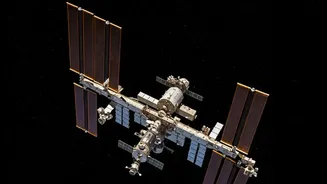
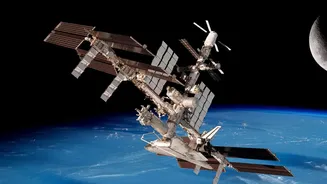
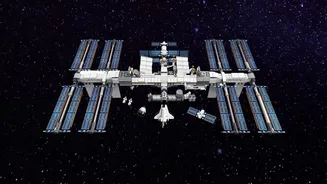
By 2035, India plans to have its own modular space station, the Bharatiya Antariksh Station (BAS), orbiting roughly 400-450 kilometres above Earth. This isn't science fiction; it's the next logical step in the nation's space journey, building on the capabilities
developed through the Gaganyaan human spaceflight program. The station, expected to weigh around 52 tonnes, will be assembled in phases. The first module is targeted for a 2028 launch. Once complete, it will house two to four astronauts for long-duration missions of three to six months, transforming India into only the fourth entity to independently operate a space station. This project is a cornerstone of India's broader vision, which includes a crewed lunar landing by 2040.
The Blueprint: Learning to Build in Orbit
Building a space station is one of the most complex engineering challenges imaginable. It involves mastering technologies that are at the cutting edge of science. A key hurdle is orbital assembly; launching separate modules and joining them together precisely in space. This requires perfecting rendezvous and docking procedures, a skill ISRO is currently honing. Another critical area is the development of advanced life support systems to recycle air and water, essential for sustaining human life on long missions. To lift the heavy modules into orbit, India is also developing a powerful Next Generation Launch Vehicle (NGLV). This reusable rocket is designed to carry much heavier payloads than current launchers, making it the workhorse for both the space station and future deep-space missions.
The Laboratory: A New Frontier for Research
So, what will astronauts do up there? The BAS will primarily be a cutting-edge laboratory in microgravity. This unique environment allows scientists to conduct experiments that are impossible on Earth. Key research areas will include material sciences, where new alloys and crystals can be grown with unique properties, and biotechnology. The effects of long-term spaceflight on the human body will be studied extensively, providing crucial data for future interplanetary travel. Furthermore, the station will be a hub for pharmaceutical research, potentially leading to breakthroughs in drug development. It provides a permanent platform for a wide range of scientific studies, far exceeding the limited duration of missions like Gaganyaan.
The Payoff: Strategic, Economic and Inspirational
The benefits of the Bharatiya Antariksh Station extend far beyond the scientific community. Strategically, it cements India's position as a major global space power, granting it an autonomy that few nations possess. It enhances national security capabilities through the development of related technologies. Economically, the project is expected to drive innovation, spur high-tech manufacturing, and create new commercial opportunities within India's growing space ecosystem. The development of the NGLV, for instance, aims to make India a competitive player in the global launch market. Perhaps most importantly, a national space station serves as a powerful source of inspiration. It can motivate a new generation to pursue careers in science, technology, engineering, and mathematics, fuelling the country's intellectual capital for decades to come.