



The Celestial Summer Highlight
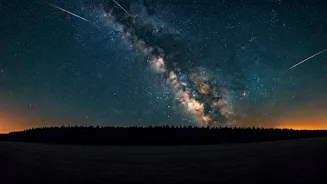
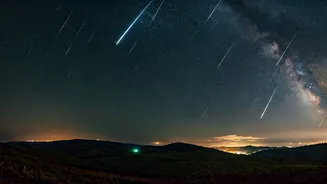
The Southern Delta Aquariid meteor shower is an annual event that graces our skies from mid-July to late August. In 2026, it will be active from July 12 to August 23, with its predicted peak occurring around July 30. While not as famous as the Perseids
in August, the Delta Aquariids offer a steady stream of meteors, with the potential for up to 25 per hour under ideal conditions. These meteors originate from the trail of dust and debris left by Comet 96P/Machholz. They are known for being fainter and slower than their Perseid counterparts, which makes a dark, clear sky absolutely essential for a good viewing. The moon will be nearly full during the 2026 peak, making viewing conditions challenging. Therefore, the best time to watch will be in the week leading up to the peak, during the moon-free hours after midnight and before dawn.
The Altitude Advantage
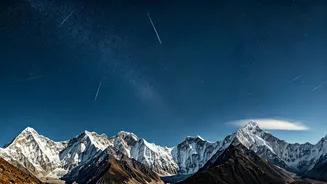
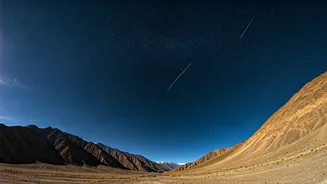
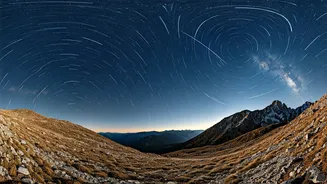
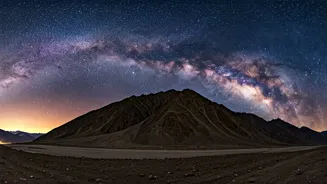
To truly witness the magic of a meteor shower, you need to get away from the city lights. But another, equally important step is to get above the haze. High-altitude locations like mountain passes provide a significant advantage for stargazing. The higher you go, the less atmosphere you have to look through. Earth's atmosphere, while vital for life, acts like a blurry filter for celestial light. It contains turbulent layers of air that cause stars to twinkle and faint objects to disappear. By positioning yourself at a higher elevation, such as in the Himalayas in Ladakh or Spiti Valley, you are literally rising above a large portion of this atmospheric distortion. This results in a steadier, clearer view where stars appear as sharp points of light and faint meteors that would be invisible at sea level become visible.
Escaping the Haze and Dust
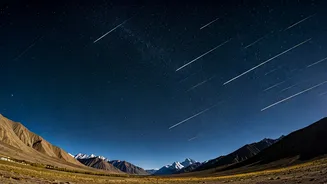
Beyond atmospheric turbulence, the lower atmosphere is also filled with aerosols—tiny particles of dust, pollution, and moisture. These particles scatter light. During the day, this scattering is what makes the sky blue. But at night, it has a detrimental effect on stargazing. Artificial light from cities bounces off this haze, creating a pervasive 'sky glow' that can blot out all but the brightest stars. Even in areas with low light pollution, natural and man-made dust can obscure the view. Mountain passes, particularly in dry, remote regions like Ladakh or the high deserts of Spiti, are often above the thickest layers of this particulate matter. This 'dust-free' environment means less scattered light and higher transparency, allowing the faint, delicate streaks of the Delta Aquariid meteors to shine through with greater clarity.
Finding Your Mountain Perch
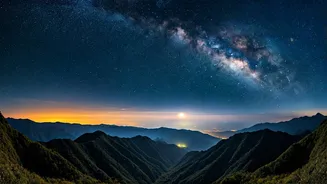
India is blessed with several high-altitude locations perfect for stargazing. Ladakh, home to India's first Dark Sky Reserve in Hanle, and Spiti Valley in Himachal Pradesh are world-class destinations with altitudes exceeding 3,500 metres. These spots offer exceptionally clear, dry, and dark skies. Other excellent, more accessible options include high passes in Uttarakhand, or hill stations in the Western Ghats like Coorg, which provide significant elevation away from major city lights. When choosing your spot, look for a location with a wide, unobstructed view of the sky, especially towards the south where the Aquarius constellation will be. Use online light pollution maps to find the darkest possible skies within a reasonable distance. A farmer's field, a remote campsite, or a designated viewpoint on a mountain road can all serve as excellent observatories for the night.
Gearing Up for the Show
Once you've chosen your location, preparation is key for an enjoyable night. The most important tool you have is your own eyes, as binoculars or telescopes have too narrow a field of view for catching sporadic meteors. Give your eyes at least 20-30 minutes to fully adapt to the dark; avoid looking at your bright phone screen, as it will ruin your night vision. Dress in warm layers, as even summer nights can get cold at high altitudes. A reclining chair or a blanket will save you from neck strain as you look up for an extended period. Finally, pack some warm drinks and snacks, and be patient. Meteor showers often come in spurts with lulls in between. Find the radiant point in the constellation Aquarius, but don't stare at it directly—meteors will appear all over the sky, and those further from the radiant will have longer, more dramatic trails.