


The Unseen Necessity: A Breath of Fresh Air
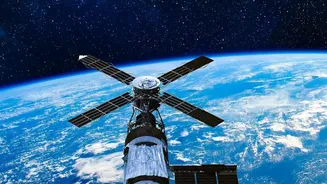
A space station is essentially a sealed container hurtling through a vacuum. Inside, a handful of humans exhale carbon dioxide (CO2), a gas that can be toxic in high concentrations. Without a system to manage it, a station's air would quickly become unbreathable.
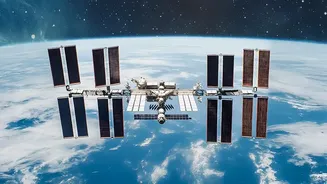
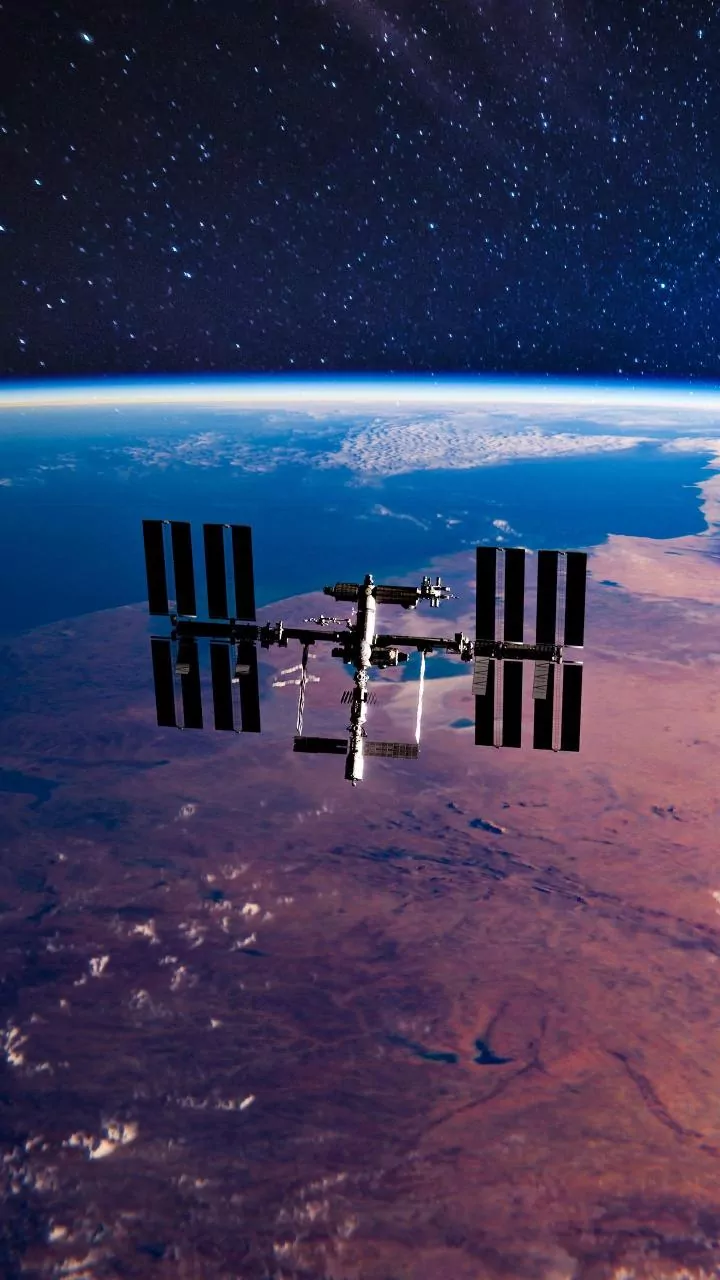
This is the primary job of the Environmental Control and Life Support System (ECLSS). It's a complex network of machines that doesn't just supply oxygen; it scrubs CO2, filters out hundreds of other harmful trace contaminants, and controls temperature and humidity to keep the crew safe and comfortable. Early space missions used simple, disposable chemical canisters, but for long-term hubs like the International Space Station (ISS), this is unsustainable.
The CO2 Challenge: From Waste to Resource
The main villain in this atmospheric story is CO2. On Earth, plants handle it for us. In space, that job falls to technology. Initially, missions used non-regenerable filters, like lithium hydroxide canisters, which captured CO2 but then had to be discarded. This 'open-loop' approach is fine for short trips but creates a massive logistical burden for a permanent outpost. The breakthrough for long-term stays came with regenerative, or 'closed-loop', systems. Technologies like the Carbon Dioxide Removal Assembly (CDRA) on the ISS use materials like zeolites or amines that can capture CO2 and then be 'cleaned' with heat or vacuum, venting the CO2 overboard or, even better, sending it to another system for recycling.
The Magic of a Closed Loop
This is where the system gets truly clever. Advanced systems don't just dump the captured CO2. On the ISS, a process called the Sabatier reaction takes that 'waste' CO2 and combines it with hydrogen (a byproduct from splitting water to make oxygen) to create two new products: water and methane. The water is then cycled back into the station's supply for drinking or to be split into more breathable oxygen. While the methane is currently vented, this process significantly 'closes the loop'. ESA's Advanced Closed Loop System (ACLS), for example, can save about 400 litres of water from needing to be launched from Earth each year by recycling CO2 into oxygen. This move toward self-sufficiency is the key to long-term habitation.
The Payoff: More Science, Less Resupply
Every kilogram of supplies launched into space is incredibly expensive. By creating regenerative systems that recycle air and water, space agencies dramatically reduce their dependence on costly resupply missions. The ISS's life support system, for instance, recycles nearly 98% of the water on board. This reduction in logistical needs has a direct and powerful impact: it frees up mass on cargo rockets for what the science hub is actually for—scientific instruments, experiments, and other equipment. It also allows for longer, more complex missions without the constant need to send up tanks of water and oxygen. This is what enables the 'continuous stays' mentioned in the headline, turning the station from a temporary camp into a permanent laboratory.
Enabling the Future: From LEO to Mars
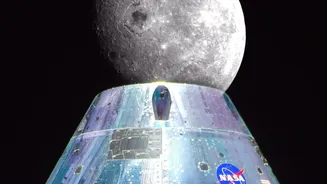
The technology being perfected on the ISS is not just for low-Earth orbit. It is the proving ground for the systems that will keep astronauts alive on multi-year missions to the Moon and Mars. For future outposts like the lunar Gateway, where resupply will be even more difficult and expensive, highly reliable, closed-loop life support is not a luxury—it is an absolute necessity. NASA and its partners are continually developing next-generation technologies to increase oxygen recovery rates even further, aiming for near-total self-sufficiency. These advanced air systems, quietly humming in the background, are therefore not just maintaining life; they are actively building the foundation for humanity's sustained future in the cosmos.