









A Spectacle of Divine Proportions
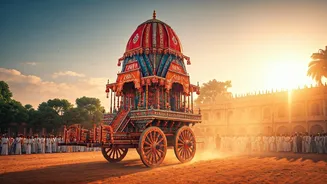
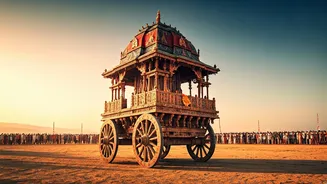
Before you even consider the cultural or religious weight of Rath Yatra, you have to acknowledge its sheer visual power. At its heart, especially in Puri, are the three colossal chariots. These are not mere floats; they are mobile temples, each over 40
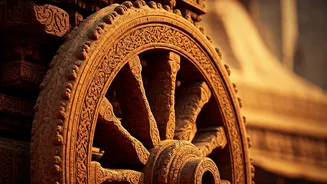
feet tall, constructed anew each year by traditional artisans. Each chariot has a unique colour scheme: Lord Jagannath’s Nandighosha is wrapped in vibrant reds and yellows, Lord Balabhadra’s Taladhwaja in reds and greens, and Devi Subhadra’s Darpadalana in reds and blacks. When these structures move through the streets, adorned with flowers, fabrics, and intricate carvings, they create a moving tapestry of colour. For a platform like Instagram Reels, which thrives on immediate visual impact, this is premium content. The bright colours pop on a phone screen, the scale is awe-inspiring, and the craftsmanship offers endless details for close-up shots—all before the main event even truly begins.
Devotion in Motion
A static image of a chariot is impressive, but Rath Yatra is fundamentally about movement. The name itself means ‘Chariot Journey.’ This kinetic energy is what makes it so compelling for short-form video. The festival is powered by people. Thousands of devotees grip thick coir ropes to pull the chariots along the Bada Danda, the grand avenue leading to the Gundicha Temple. This act of pulling is an expression of faith, a collective effort that is both chaotic and unified. A 30-second Reel can perfectly capture this dynamic: the straining faces of devotees, the slow, immense grind of the wooden wheels, the sea of humanity swaying in unison. It’s an authentic, unscripted display of collective emotion and physical power. Social media algorithms favour content that elicits a strong emotional response, and the pure, unadulterated devotion on display during the Yatra provides exactly that. It's a human story of faith that needs no translation.
Storytelling in Sixty Seconds
Beyond the main procession, Rath Yatra is filled with distinct, narrative-rich rituals that are practically made for short-form storytelling. Take the ‘Pahandi’ ceremony, where the deities are carried from the temple to the chariots in a rhythmic, swaying procession. It’s a moment of high drama and deep reverence, easily condensed into a powerful video clip. Then there's the ‘Chhera Panhara,’ where the Gajapati King of Puri sweeps the platforms of the chariots with a golden broom. This ritual signifies that in the eyes of the divine, everyone is equal, from the king to the commoner. Such moments are not just visually interesting; they are packed with meaning. A creator can easily build a Reel around this single ritual, adding a simple text overlay explaining its significance. This transforms a simple video into a piece of cultural education, making the festival accessible to a global audience who may be unfamiliar with the intricate details.
The Festival’s Viral Soundtrack
Video on social media is a two-part equation: visuals and audio. Rath Yatra delivers a powerful, pre-made soundtrack. The atmosphere is saturated with sound. There’s the constant, percussive clang of cymbals and the deep boom of drums. There are the resounding chants of “Jai Jagannath!” that rise and fall like a wave across the crowd. Devotional songs, or *bhajans*, are sung by various groups, creating a rich and layered soundscape. This organic audio is far more compelling than any trending pop song an influencer might overlay. When someone shares a Reel from the event, the raw sounds of the celebration transport the viewer directly into the heart of the procession. This auditory immersion is a key reason why content from the festival feels so authentic and alive, encouraging shares and engagement from those who wish they could be there.
Digital Darshan and Performative Faith
The rise of Rath Yatra Reels also sparks a fascinating conversation about the nature of modern worship. For countless people unable to travel to Puri or participate in their local processions, social media offers a form of ‘digital darshan’—a chance to witness the divine and feel connected to the community from afar. It democratises the experience. However, it also introduces an element of performance. When the focus shifts from experiencing the moment to capturing it, does it dilute the spiritual intent? The pressure to get the perfect, aesthetically pleasing shot for the ‘gram can sometimes overshadow the act of devotion itself. This is the central tension of many modern cultural experiences: the line between participation and documentation. Rath Yatra, with its massive scale and visual splendour, is now at the forefront of this evolving relationship between ancient faith and the very modern desire to capture, post, and share.