



A Burning National Problem
The sight of smoke-filled skies across North India has become an unwelcome annual phenomenon. After the harvest, an estimated 87 million tonnes of crop residue are burned in fields, contributing significantly to air pollution in major cities and causing
widespread public health crises. This practice of stubble burning not only releases harmful particulate matter and greenhouse gases but also degrades soil quality. For decades, this agricultural waste was seen as a nuisance with no viable, large-scale solution. This presented not just an environmental crisis, but a massive economic opportunity for anyone who could envision this 'waste' as a valuable raw material.
From Farm Fields to Building Facades
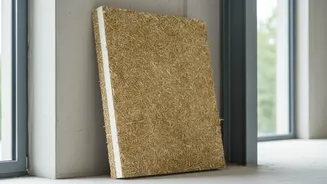
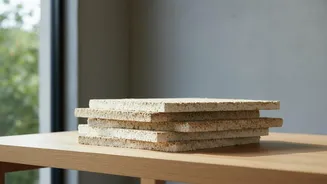
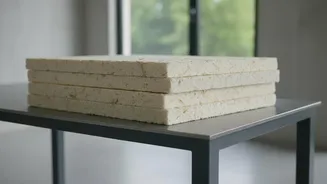
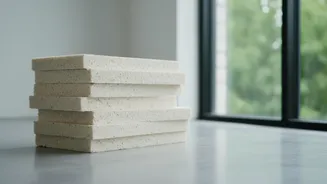
Enter a cohort of pioneering Indian startups who see this problem differently. Companies like Strawcture Eco and GreenJams are at the forefront of a movement to convert agricultural residues—such as wheat straw, rice husks, and sugarcane bagasse—into high-performance building materials. Instead of burning the straw, these companies purchase it from farmers, creating a new revenue stream for rural communities and forming a circular economy. The end products are durable, eco-friendly panels and blocks that can be used for walls, flooring, ceilings, and insulation, effectively turning a seasonal problem into a year-round sustainable solution.
The Science of Sustainable Building
The technology, while innovative, is elegantly simple in concept. The process generally involves collecting the agricultural fibres and binding them together. Strawcture Eco, for example, uses the crop residue itself to create bio-based panels, which are compressed under heat and pressure. This process often utilizes the natural polymers within the plant fibres, like lignin, which can act as a bio-adhesive, reducing the need for synthetic, chemical-based glues. GreenJams takes a slightly different approach with its 'Agrocrete', which combines crop residues with industrial by-products to create carbon-negative building blocks. These methods result in materials that are not only strong but also inherently fire-resistant and provide excellent thermal and acoustic insulation.
Benefits Beyond the Building
The advantages of this technology extend far beyond just constructing a wall. By locking the carbon from the plant waste into a building material, these products are often carbon-negative, meaning they sequester more carbon dioxide than is emitted during their production. For instance, GreenJams' Agrocrete blocks transform buildings into long-term carbon sinks. These materials are also significantly more insulating than traditional options like clay bricks, which can drastically reduce a building's energy consumption for heating and cooling. Furthermore, some of these products can cut overall construction costs by up to 50% due to being lightweight, requiring less labour, and speeding up masonry work.
Challenges on the Road to Adoption
Despite the clear benefits, the path to widespread adoption is not without its obstacles. One of the biggest challenges is convincing a traditionally conservative construction industry to embrace new materials. Builders and architects often prioritize tried-and-tested methods, and the perception of biomaterials as a 'green premium' can be a barrier, even when they are cost-competitive. Scaling up production to meet the massive demand of the Indian construction market requires significant investment in manufacturing facilities and robust supply chains. Building trust with farmers to ensure a consistent supply of raw material is another critical hurdle these pioneers are actively working to overcome. However, with government initiatives like the 'Innovation and Agri-Entrepreneurship Development' program supporting agri-startups, the ecosystem for such innovations is steadily improving.