





What Are Small Satellites?
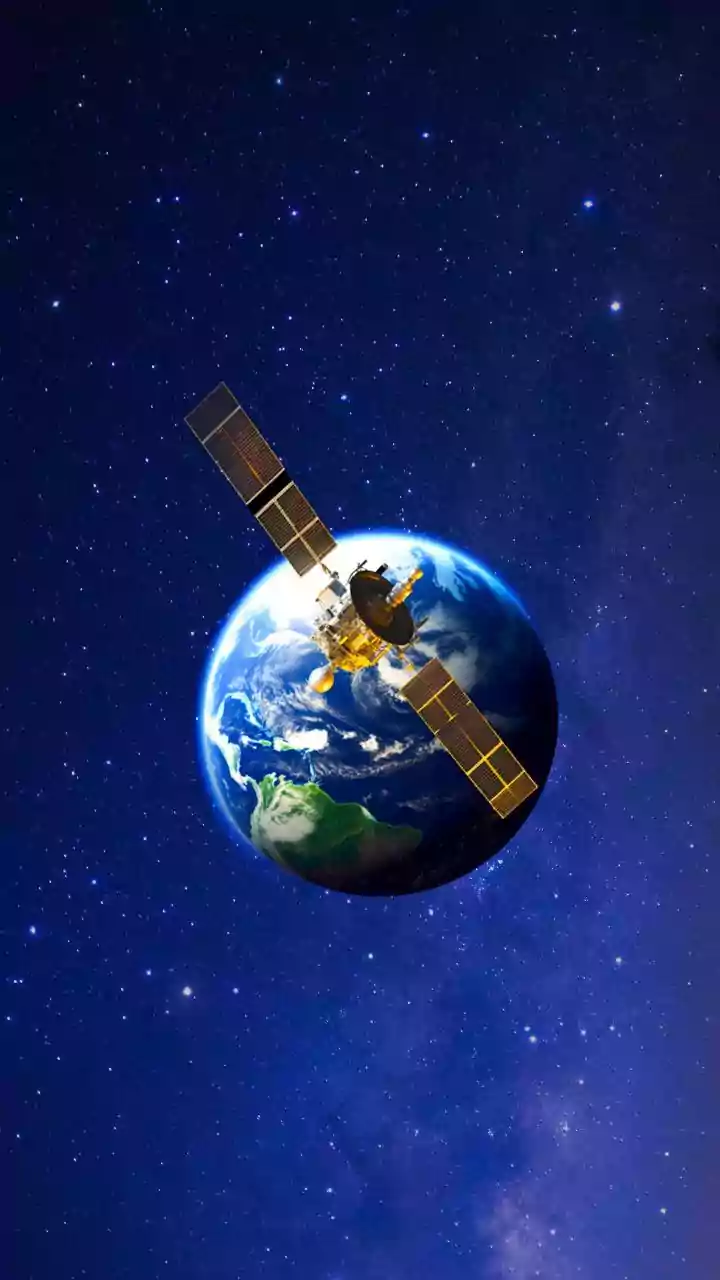
When you picture a satellite, you might think of a car-sized machine that took years and a colossal budget to build. Today, the frontier is dominated by 'small satellites' or 'smallsats,' a category for spacecraft weighing less than 500 kilograms. The
most transformative among these are CubeSats. Originally developed in 1999 as an educational tool, a standard CubeSat is a 10x10x10 cm cube weighing just over a kilogram. Their genius lies in standardization. Using commercial off-the-shelf components, like the kind found in smartphones, has made them cheaper and faster to produce. These units can be stacked together like building blocks (e.g., 3U or 6U) to house more complex instruments, creating a flexible and modular platform for a wide range of missions.
Lowering the Barrier to Orbit
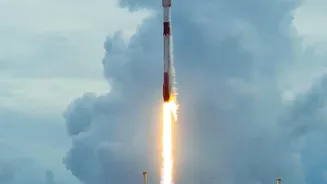
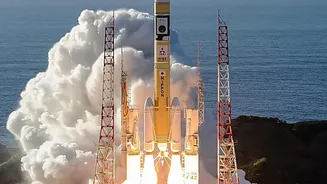
The single biggest impact of small satellites is cost. Where a traditional satellite can cost hundreds of millions of dollars, a commercial smallsat mission can get off the ground for a fraction of that price. This dramatic cost reduction comes from two main areas: standardized manufacturing and cheaper launches. Instead of bespoke, 'space-rated' parts, developers can use proven commercial components. For launches, smallsats often 'rideshare,' piggybacking on larger rocket launches for a much lower fee. This has democratized access to space, allowing universities, startups, and even emerging space nations to run their own orbital missions. In India, the rise of companies like Skyroot Aerospace, which recently launched its Vikram-1 rocket, and ISRO's own Small Satellite Launch Vehicle (SSLV), are specifically aimed at this burgeoning market.
A New Era for Earth Observation
One of the most powerful applications of this new technology is in Earth observation. Instead of relying on a single, expensive satellite, companies can launch a 'constellation' of dozens or hundreds of smallsats. This network can provide near real-time imagery of the entire planet. The applications are transformative for business and society. Farmers can use the data for precision agriculture, logistics companies can monitor shipping routes, and environmental groups can track deforestation with unprecedented accuracy. In times of crisis, these constellations are invaluable, offering real-time data to coordinate responses to floods, wildfires, and other natural disasters.
Connecting the Planet and Beyond
Small satellites are also the backbone of new global communication networks. Companies like SpaceX's Starlink and OneWeb are deploying massive constellations in low-Earth orbit to provide high-speed internet to remote and underserved regions across the globe. This goes beyond just browsing the web; it enables tele-education, telemedicine, and e-commerce in areas that have been left behind by terrestrial infrastructure. Furthermore, these satellites are creating a new network for the Internet of Things (IoT), allowing devices in remote agricultural fields or on critical infrastructure to stay connected. They also serve as vital communication relays during emergencies when ground systems fail.
Incubators for Innovation
Because they are relatively low-risk and low-cost, small satellites have become the perfect testbeds for new space technologies. Startups and research labs can rapidly prototype and flight-test new ideas, from advanced AI-powered controllers and miniaturized sensors to novel propulsion systems. This 'testbed in orbit' model allows for faster innovation cycles. Rather than waiting years to see if a new technology works on a high-stakes mission, developers can get real-world performance data quickly. This accelerates the pace of the entire industry, allowing new capabilities to be proven in space and then integrated into larger, more ambitious missions, including future interplanetary exploration.