
Gear Up Before You Go
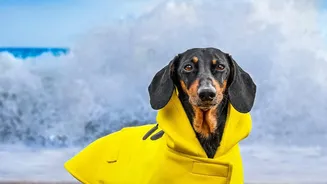
Preparation is the first step to a safe and comfortable walk in the rain. A well-fitting waterproof coat can be a great help, especially for short-haired, small, or senior dogs who may get chilled easily. This keeps their core warm and dry, making the walk more
pleasant and reducing the amount of drying you need to do later. For visibility on gloomy days, a reflective collar, leash, or LED light is crucial. Poor light and rain can make it difficult for drivers and cyclists to see you and your pet. Some pet owners also opt for waterproof booties. These can protect paws from mud, sharp debris hidden in puddles, and irritants, but not all dogs tolerate them. If your pet is resistant, don't force it; proper paw cleaning after the walk is a good alternative.
Navigate Walks Wisely
Once you're outside, be mindful of your environment. It’s best to keep walks shorter during heavy rain. Steer your pet away from puddles and stagnant water whenever possible. These can be breeding grounds for dangerous bacteria, including Leptospira, which causes leptospirosis, a serious illness that can affect the kidneys and liver. These bacteria can enter a dog's body through skin contact with contaminated water, not just by drinking it. Also, be cautious of potential hazards hidden by rainwater, like potholes or sharp objects. In cities, waterlogged areas can also hide open drains or electrical wires, so sticking to familiar, clearer paths is the safest option.
The Crucial Post-Walk Clean-Up
What you do immediately after a rainy walk is just as important as the walk itself. Have a towel ready at the door to thoroughly dry your pet. Pay special attention to their paws, underbelly, ears, and any skin folds where moisture can get trapped. Damp fur is a perfect environment for fungal and bacterial skin infections to develop, leading to itchy, red, and irritated skin, sometimes called hot spots. Cleaning their paws is non-negotiable. A simple rinse with lukewarm water followed by thorough drying is often sufficient. You can also use a gentle, pet-safe paw cleanser. This removes mud, allergens, and any potentially harmful bacteria picked up from the street.
Monitor for Monsoon-Related Health Issues
The rainy season sees a spike in specific pet illnesses in India. Beyond skin infections, humidity creates a perfect breeding ground for ticks and fleas, so ensure your pet's parasite prevention is up to date. Ear infections are also common, especially in breeds with floppy ears, because trapped moisture encourages yeast and bacteria to grow. Watch for symptoms like excessive head shaking, scratching at the ears, or a bad odour. The most serious risk is leptospirosis, which can be contracted from contaminated water. Symptoms include fever, vomiting, muscle pain, and lethargy. If you notice any of these signs, contact your veterinarian immediately.
When to Skip the Walk
While daily walks are important, some weather is best avoided. During thunderstorms with lightning or extremely heavy downpours, it's safer to stay inside. The stress from loud thunder can also be very distressing for many animals. On days when a walk isn't possible, you can prevent boredom and burn off energy with indoor activities. Games like 'find the treats', where you hide their favourite snacks around the house, provide excellent mental stimulation. A game of indoor fetch with a soft toy or a session of tug-of-war can also be a great physical outlet. Puzzle toys and snuffle mats are other fantastic tools to keep their minds engaged when they can't explore the outdoors.